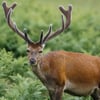
Red Deer
Cervus elaphus
Also known as: Hart, Stag
Red Deer are one of the largest deer species in the world, inhabiting woodland, moorland, and open mountainsides across Europe. During the autumn breeding season, known as the 'rut', males (stags) compete for females (hinds) by roaring loudly and locking antlers in pushing contests. Their coat changes colour with the seasons, turning from a rich reddish-brown in summer to a duller grey-brown in winter.
Red Deer Quick Facts
Frequently Asked Questions About the Red Deer
The Red Deer can be found in Europe, western Asia, North Africa and is most often associated with Forests, grasslands, moorlands.
The Red Deer feeds on Grasses, leaves, shoots, bark and is considered a herbivore.
The Red Deer is currently listed as Least Concern, with a increasing population trend. Main threats include Habitat fragmentation, Overhunting.
The Red Deer is usually matriarchal groups.
The Red Deer is typically crepuscular.
The Red Deer is resident (altitudinal).
The main threats facing the Red Deer include Habitat fragmentation and Overhunting.
The Red Deer population trend is currently increasing.
Well-known places to look for the Red Deer include Richmond Park (UK) and Scottish Highlands.
Natural predators of the Red Deer include Wolves, Bears, and Lynx.
Historically important for hunting and venison.
The Red Deer is part of the Cervidae family and an Artiodactyla order.
The Red Deer weighs about 200 kg, stands around 120 cm tall, and reaches about 210 cm in length.
The Red Deer can reach speeds of around 50 km/h.