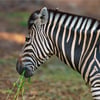
Plains Zebra
Equus quagga
Also known as: Common Zebra
The Plains Zebra is the most widespread zebra species, found across the grasslands, savannas, and open woodlands of eastern and southern Africa. Its bold black-and-white striping is unique to each individual, helping members of a herd recognise one another while also confusing predators and biting insects. Plains zebras are highly social grazers, usually living in family groups led by a stallion and travelling in larger mixed herds during seasonal movements in search of fresh grass and water.
Plains Zebra Quick Facts
Frequently Asked Questions About the Plains Zebra
The Plains Zebra is found across eastern and southern Africa, especially in grasslands, savannas, and open woodland habitats where grazing and water are available.
The Plains Zebra is primarily a grazer, feeding mostly on grasses but also browsing leaves and shoots when conditions are dry.
The Plains Zebra is currently listed as Near Threatened, with pressure from habitat loss, competition with livestock, fencing, and hunting in parts of its range.
The Plains Zebra is usually family harems and larger mixed herds.
The Plains Zebra is typically diurnal.
The Plains Zebra is seasonal movements.
The main threats facing the Plains Zebra include Habitat loss, Competition with livestock, Fencing, and Hunting.
The Plains Zebra population trend is currently decreasing.
Well-known places to look for the Plains Zebra include Serengeti National Park (Tanzania), Maasai Mara National Reserve (Kenya), and Etosha National Park (Namibia).
Natural predators of the Plains Zebra include Lions, Spotted hyenas, African wild dogs, and Crocodiles.
One of the most recognisable animals of the African savanna and a classic symbol of wild grassland ecosystems.
The Plains Zebra is part of the Equidae family and a Perissodactyla order.
The Plains Zebra weighs about 300 kg, stands around 140 cm tall, and reaches about 240 cm in length.
The Plains Zebra can reach speeds of around 65 km/h.