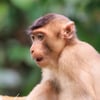
Southern Pig-tailed Macaque
Macaca nemestrina
Also known as: Sundaland Pig-tailed Macaque, Beruk
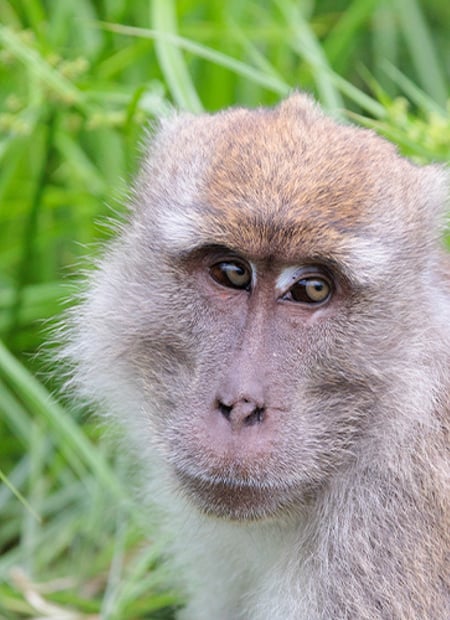
The Southern Pig-tailed Macaque (*Macaca nemestrina*) is a robust, ground-dwelling primate native to the rainforests of Borneo, Sumatra, and the Malay Peninsula. Named for its short, upward-curling tail that resembles that of a pig, this macaque forages extensively on the forest floor in large, structured troops led by a dominant male. Highly intelligent and dexterous, it is well known locally for its trained ability to harvest coconuts, and plays an important ecological role as a seed disperser across the lowland and hill forests it inhabits.
Southern Pig-tailed Macaque Quick Facts
Frequently Asked Questions About the Southern Pig-tailed Macaque
It is found across Borneo, Sumatra, and the Malay Peninsula, favoring lowland and hill rainforest, swamp forest, and forest edges where it forages on the ground.
It is an opportunistic omnivore, feeding mainly on fallen fruit and seeds but also taking invertebrates, small vertebrates, and fungi as it forages across the forest floor.
The species is listed as Vulnerable by the IUCN, with numbers declining due to large-scale deforestation for oil palm plantations, hunting, and capture for the pet trade.
It takes its name from its short tail, which is carried curled upward over its back in a manner that resembles a pig's tail, unlike the long tails of many other macaque species.
The Southern Pig-tailed Macaque is usually multi-male, multi-female troops of 15-40 individuals led by a dominant male.
The Southern Pig-tailed Macaque is typically diurnal.
The Southern Pig-tailed Macaque is resident.
The main threats facing the Southern Pig-tailed Macaque include Deforestation for oil palm plantations, Hunting and human-wildlife conflict, and Capture for the pet trade.
The Southern Pig-tailed Macaque population trend is currently decreasing.
Well-known places to look for the Southern Pig-tailed Macaque include Danum Valley Conservation Area (Sabah, Borneo), Sepilok Orangutan Rehabilitation Centre (Sabah, Borneo), and Kinabatangan River (Sabah, Borneo).
Natural predators of the Southern Pig-tailed Macaque include Clouded leopards, Large pythons, Crocodiles, and Raptors (for infants).
Traditionally trained by communities in Malaysia and Indonesia to harvest coconuts, a practice that has drawn both cultural interest and animal-welfare scrutiny.
The Southern Pig-tailed Macaque is part of the Cercopithecidae family and a Primates order.
The Southern Pig-tailed Macaque weighs about 9.5 kg and reaches about 55 cm in length.