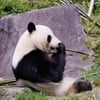
Giant Panda
Ailuropoda melanoleuca
Also known as: Panda Bear
The Giant Panda is a bear species endemic to China, instantly identifiable by its bold black-and-white coat. Although they belong to the order Carnivora, they have evolved to subsist almost entirely on bamboo, eating up to 38 kg a day to meet their energy needs. They possess a unique 'pseudo-thumb', which is actually an enlarged wrist bone, allowing them to grip bamboo stems with surprising dexterity.
Giant Panda Quick Facts
Frequently Asked Questions About the Giant Panda
The Giant Panda can be found in China and is most often associated with Temperate broadleaf and mixed forests.
The Giant Panda feeds on Bamboo, occasionally small animals and is considered a herbivore (specialist).
The Giant Panda is currently listed as Vulnerable, with a increasing population trend. Main threats include Habitat fragmentation, Climate change (bamboo die-offs).
The Giant Panda is usually solitary.
The Giant Panda is typically crepuscular.
The Giant Panda is resident (altitudinal migration).
The main threats facing the Giant Panda include Habitat fragmentation and Climate change (bamboo die-offs).
The Giant Panda population trend is currently increasing.
Well-known places to look for the Giant Panda include Wolong National Nature Reserve (China).
Natural predators of the Giant Panda include Snow leopards (on cubs) and Yellow-throated martens.
Global symbol of conservation and wildlife protection.
The Giant Panda is part of the Ursidae family and a Carnivora order.
The Giant Panda weighs about 100 kg, stands around 90 cm tall, and reaches about 150 cm in length.
The Giant Panda can reach speeds of around 32 km/h.