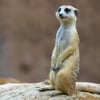
Meerkat
Suricata suricatta
Also known as: Suricate
Meerkats are small carnivores belonging to the mongoose family, inhabiting the harsh deserts and grasslands of southern Africa. They are highly social animals that live in complex underground burrows known as clans or mobs. To ensure the safety of the group while foraging, one meerkat will always stand on 'sentry duty' at a high vantage point, scanning the horizon for predators like eagles and jackals.
Meerkat Quick Facts
Frequently Asked Questions About the Meerkat
The Meerkat can be found in Southern Africa and is most often associated with Deserts, savannas.
The Meerkat feeds on Insects, small vertebrates, eggs, plants and is considered a omnivore.
The Meerkat is currently listed as Least Concern, with a stable population trend. Main threats include Predation, Climate change (droughts).
The Meerkat is usually clans/groups.
The Meerkat is typically diurnal.
The Meerkat is resident.
The main threats facing the Meerkat include Predation and Climate change (droughts).
The Meerkat population trend is currently stable.
Well-known places to look for the Meerkat include Kalahari Desert (Botswana) and Namib Desert.
Natural predators of the Meerkat include Martial eagles, Jackals, and Snakes.
Famous for their cooperative behaviour in documentaries.
The Meerkat is part of the Herpestidae family and a Carnivora order.
The Meerkat weighs about 0.77 kg, stands around 28 cm tall, and reaches about 28 cm in length.
The Meerkat can reach speeds of around 32 km/h.