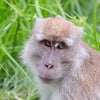
Long-tailed Macaque
Macaca fascicularis
Also known as: Crab-eating Macaque, Cynomolgus Monkey
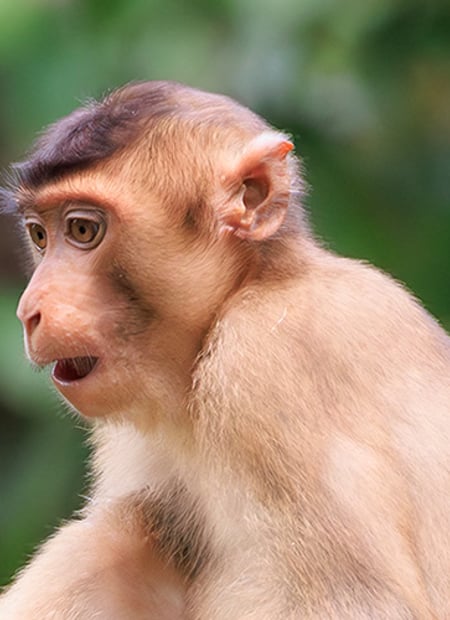
The Long-tailed Macaque (*Macaca fascicularis*), also known as the crab-eating macaque, is a highly social and adaptable primate native to Southeast Asia. Living in matrilineal troops of up to thirty or more individuals, they are exceptionally active near water sources, mangrove forests, and coastal regions. These monkeys are easily distinguished by their remarkably long tails, which often exceed their head-to-body length, and their highly opportunistic feeding behaviors that allow them to thrive in both pristine wilderness and close proximity to human settlements.
Long-tailed Macaque Quick Facts
Frequently Asked Questions About the Long-tailed Macaque
Long-tailed Macaques are native to Southeast Asia, occupying a wide range of habitats such as primary and secondary rainforests, mangroves, coastal forests, riverbanks, and areas near human settlements.
They are opportunistic omnivores. While fruit makes up the majority of their diet, they also eat leaves, insects, flowers, seeds, small vertebrates, and crabs, which is why they are also called crab-eating macaques.
The Long-tailed Macaque is listed as Endangered by the IUCN, with populations declining due to habitat fragmentation, hunting, and capture for research or the exotic pet trade.
They are named for their exceptionally long tail, which is often longer than their actual body, measuring between 40 to 65 cm.
The Long-tailed Macaque is usually matrilineal troops (up to 30 or more individuals).
The Long-tailed Macaque is typically diurnal.
The Long-tailed Macaque is resident.
The main threats facing the Long-tailed Macaque include Habitat destruction and fragmentation, Human-wildlife conflict, and Capture for medical research and the pet trade.
The Long-tailed Macaque population trend is currently decreasing.
Well-known places to look for the Long-tailed Macaque include Bako National Park (Sarawak, Borneo), Sepilok Orangutan Rehabilitation Centre (Sabah, Borneo), and Kinabatangan River (Sabah, Borneo).
Natural predators of the Long-tailed Macaque include Saltwater crocodiles, Large pythons, Leopards, and Raptors (for infants).
Widely represented in Southeast Asian folklore and religious temples, such as the Uluwatu Temple in Bali, where they are protected by locals.
The Long-tailed Macaque is part of the Cercopithecidae family and a Primates order.
The Long-tailed Macaque weighs about 5.5 kg and reaches about 48 cm in length.
The Long-tailed Macaque can reach speeds of around 35 km/h.