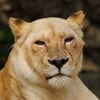
Lioness
Panthera leo
Also known as: African Lioness
The lioness is the primary hunter of the pride, relying on teamwork to take down large prey like wildebeests, zebras, and buffalo. Unlike the male lion, she is sleeker and lacks a heavy mane, which allows her to be faster and more agile in the field. Lionesses are the core of the pride, raising cubs communally and fiercely defending their territory.
Lioness Quick Facts
Frequently Asked Questions About the Lioness
Lionesses are the core members of a pride and often hunt cooperatively, especially on open savanna where teamwork helps them surround and bring down prey. Because they live and hunt together for years, they can coordinate ambushes far more effectively than a solitary cat.
The Lioness can be found in Sub-Saharan Africa and is most often associated with Savannas, grasslands, open woodlands.
The Lioness feeds on Ungulates like zebra, wildebeest, buffalo and is considered a carnivore.
The Lioness is currently listed as Vulnerable, with a decreasing population trend. Main threats include Habitat loss, Human-wildlife conflict, Prey depletion.
The Lioness is usually pride.
The Lioness is typically mainly nocturnal and crepuscular.
The Lioness is resident.
The main threats facing the Lioness include Habitat loss, Human-wildlife conflict, and Prey depletion.
The Lioness population trend is currently decreasing.
Well-known places to look for the Lioness include Masai Mara (Kenya), Serengeti (Tanzania), and Kruger (South Africa).
Natural predators of the Lioness include Hyenas, Crocodiles, and Other lions.
A universal symbol of strength, courage, and pride.
The Lioness is part of the Felidae family and a Carnivora order.
The Lioness weighs about 130 kg, stands around 110 cm tall, and reaches about 175 cm in length.
The Lioness can reach speeds of around 80 km/h.