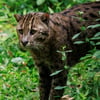
Fishing Cat
Prionailurus viverrinus
Also known as: Fish Cat
The Fishing Cat is a medium-sized wild cat native to South and Southeast Asia, specifically adapted for life in wetlands and mangrove swamps. Unlike most felines, it loves water and is a powerful swimmer, using its partially webbed paws to paddle and scoop fish from the water. It has a double-layered coat that keeps its skin dry even while hunting underwater.
Fishing Cat Quick Facts
Frequently Asked Questions About the Fishing Cat
The Fishing Cat can be found in South and Southeast Asia and is most often associated with Wetlands, marshes, mangroves.
The Fishing Cat feeds on Fish, crustaceans, small mammals and is considered a carnivore/piscivore.
The Fishing Cat is currently listed as Vulnerable, with a decreasing population trend. Main threats include Wetland drainage, Overfishing, Poaching.
The Fishing Cat is usually solitary.
The Fishing Cat is typically nocturnal.
The Fishing Cat is resident.
The main threats facing the Fishing Cat include Wetland drainage, Overfishing, and Poaching.
The Fishing Cat population trend is currently decreasing.
Well-known places to look for the Fishing Cat include Coringa Mangroves (India) and Sri Lanka Wetlands.
Natural predators of the Fishing Cat include Large pythons, Crocodiles, and Leopards.
A unique example of a cat that has fully adapted to an aquatic lifestyle.
The Fishing Cat is part of the Felidae family and a Carnivora order.
The Fishing Cat weighs about 8.5 kg, stands around 35 cm tall, and reaches about 75 cm in length.
The Fishing Cat can reach speeds of around 30 km/h.