Fallow Deer
Dama dama
Also known as: Common Fallow Deer
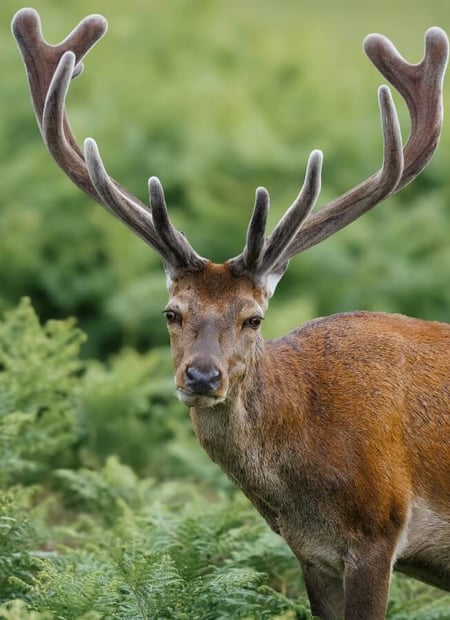
The Fallow Deer is an elegant, medium-sized deer widespread across Europe, characterised by its spotted chestnut coat and long tail. The males (bucks) are unique among British deer for having broad, flattened 'palmate' antlers, similar to those of a moose. They are a herding species often found in large groups in parklands and woodlands.
Fallow Deer Quick Facts
Frequently Asked Questions About the Fallow Deer
The Fallow Deer can be found in Europe, introduced elsewhere and is most often associated with Woodlands, grasslands, parklands.
The Fallow Deer feeds on Grasses, leaves, shoots, bark and is considered a herbivore.
The Fallow Deer is currently listed as Least Concern, with a stable population trend. Main threats include Vehicle collisions, Feral dogs.
The Fallow Deer is usually herds.
The Fallow Deer is typically diurnal/crepuscular.
The Fallow Deer is resident.
The main threats facing the Fallow Deer include Vehicle collisions and Feral dogs.
The Fallow Deer population trend is currently stable.
Well-known places to look for the Fallow Deer include New Forest (UK) and Richmond Park (UK).
Natural predators of the Fallow Deer include Wolves and Lynx.
Commonly kept in deer parks since the Roman era.
The Fallow Deer is part of the Cervidae family and an Artiodactyla order.
The Fallow Deer weighs about 60 kg, stands around 90 cm tall, and reaches about 150 cm in length.
The Fallow Deer can reach speeds of around 48 km/h.