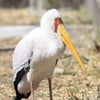
Yellow-billed Stork
Mycteria ibis
Also known as: African Wood Stork
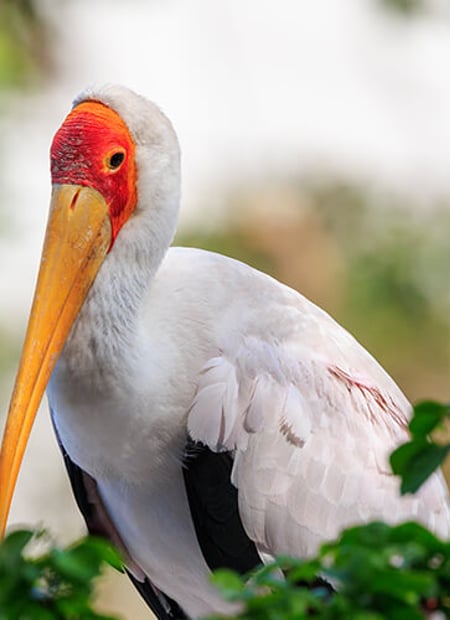
The Yellow-billed Stork is a large wading bird widespread across Africa south of the Sahara. It feeds by wading in shallow water and using its bright yellow bill to detect movement, snapping it shut on fish, frogs, and worms. During the breeding season, the skin on its face becomes a vibrant red colour to attract a mate.
Yellow-billed Stork Quick Facts
Frequently Asked Questions About the Yellow-billed Stork
The Yellow-billed Stork is nomadic and is associated with Wetlands, marshes, floodplains in Sub-Saharan Africa.
The Yellow-billed Stork can be found in Sub-Saharan Africa and is most often associated with Wetlands, marshes, floodplains.
The Yellow-billed Stork feeds on Fish, frogs, insects and is considered a carnivore.
The Yellow-billed Stork is currently listed as Least Concern, with a stable population trend. Main threats include Habitat degradation, Drought.
The Yellow-billed Stork is usually colonial.
The Yellow-billed Stork is typically diurnal.
The main threats facing the Yellow-billed Stork include Habitat degradation and Drought.
The Yellow-billed Stork population trend is currently stable.
Well-known places to look for the Yellow-billed Stork include Lake Manyara (Tanzania) and Chobe River (Botswana).
Natural predators of the Yellow-billed Stork include Crocodiles and Cheetahs (at water edges).
Known for its highly tactile 'snap-shut' fishing method.
The Yellow-billed Stork is part of the Ciconiidae family and a Ciconiiformes order.
The Yellow-billed Stork weighs about 1.6 kg, stands around 100 cm tall, reaches about 105 cm in length, and has a wingspan of about 160 cm.
The Yellow-billed Stork can reach speeds of around 45 km/h.