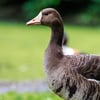
White-fronted Goose
Anser albifrons
Also known as: Greater White-fronted Goose, Specklebelly
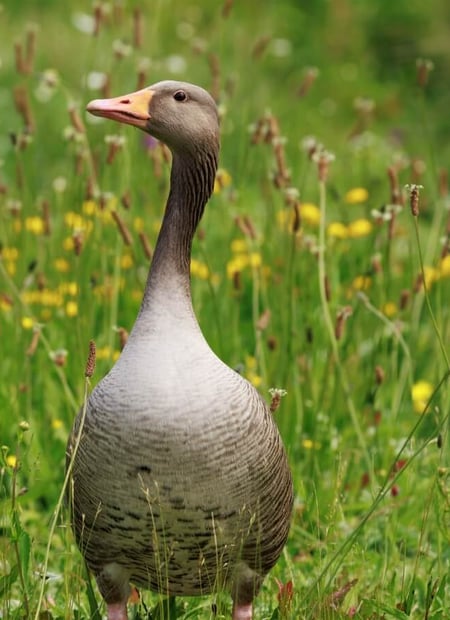
The White-fronted Goose (Anser albifrons) is a grey-brown goose named for the white patch around the base of its bill. Adults have striking black bars across the belly and orange legs. These migratory geese breed on northern tundra and gather in flocks on wetlands and farmland outside the breeding season.
White-fronted Goose Quick Facts
Frequently Asked Questions About the White-fronted Goose
Adults have a white patch around the bill, black bars on the belly and orange legs. Bill colour varies: birds from Greenland have orange bills, while Siberian birds have pink bills.
Yes. Birds from Greenland and Siberia visit the UK in winter, but the species does not breed here.
It feeds mainly on plants, grazing on grasses and sedges and eating seeds, grain and tubers.
It nests on the ground in tundra habitats, often near water. The female lines the nest with vegetation and down.
It is classed as Least Concern globally but is on the UK Red List. UK wintering populations have declined. Threats include loss of wetland feeding areas, disturbance and unsustainable hunting.
A typical clutch contains five or six eggs. The female incubates them for around 27–28 days.
Adults measure around 64–81 cm in length, weigh roughly 2–3.3 kg and have a wingspan of about 135 cm. Size varies between sexes and populations.
The White-fronted Goose is usually family groups and flocks.
The White-fronted Goose is typically active by day; also migrates at night.
The White-fronted Goose is migratory.
The main threats facing the White-fronted Goose include Loss and alteration of wetland feeding habitats, Human disturbance, and Unsustainable hunting.
The White-fronted Goose population trend is currently declining in uk wintering populations; varies by population.
Well-known places to look for the White-fronted Goose include RSPB North Warren, Suffolk (winter), RSPB Loch Gruinart, Islay (winter), and RSPB Loch Lomond, Scotland (winter).
Natural predators of the White-fronted Goose include Arctic foxes (eggs and goslings), Red foxes (eggs and goslings), Glaucous gulls (eggs), and Skuas (eggs).
Known as the specklebelly because of its dark belly markings, this goose is also a valued game bird in North America.
The White-fronted Goose is part of the Anatidae family and an Anseriformes order.
The White-fronted Goose weighs about 2.5 kg, reaches about 71 cm in length, and has a wingspan of about 135 cm.