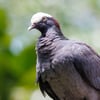
White-crowned Pigeon
Patagioenas leucocephala
The White-crowned Pigeon is a medium-sized pigeon found throughout the Caribbean and the Florida Keys, immediately recognisable by the brilliant white crown that contrasts sharply against its dark, slate-grey plumage. It is highly dependent on mangrove forests for nesting and on fruit-bearing hardwood trees for food, often making long overwater flights between feeding and breeding sites. Although once heavily hunted, populations are now monitored closely and conservation efforts have helped stabilise numbers in parts of its range.
White-crowned Pigeon Quick Facts
Frequently Asked Questions About the White-crowned Pigeon
The White-crowned Pigeon is found across the Caribbean islands and the Florida Keys, nesting in mangrove forests and foraging in tropical hardwood hammocks.
The White-crowned Pigeon feeds primarily on fruits, berries, and seeds from tropical trees and is considered a frugivore.
The White-crowned Pigeon is currently listed as Near Threatened, with a decreasing population trend. Main threats include habitat loss, hunting, and mangrove deforestation.
The White-crowned Pigeon is usually colonial nester, forages in flocks.
The White-crowned Pigeon is typically diurnal.
The White-crowned Pigeon is migratory.
The main threats facing the White-crowned Pigeon include Habitat loss, Hunting, and Mangrove deforestation.
The White-crowned Pigeon population trend is currently decreasing.
Well-known places to look for the White-crowned Pigeon include Florida Keys (USA), Everglades National Park (USA), Cuba, and Bahamas.
Natural predators of the White-crowned Pigeon include Birds of prey, Rats, and Snakes.
A flagship species for Caribbean mangrove conservation and a prized target for wildlife watchers in the Florida Keys.
The White-crowned Pigeon is part of the Columbidae family and a Columbiformes order.
The White-crowned Pigeon weighs about 0.25 kg, reaches about 33 cm in length, and has a wingspan of about 50 cm.