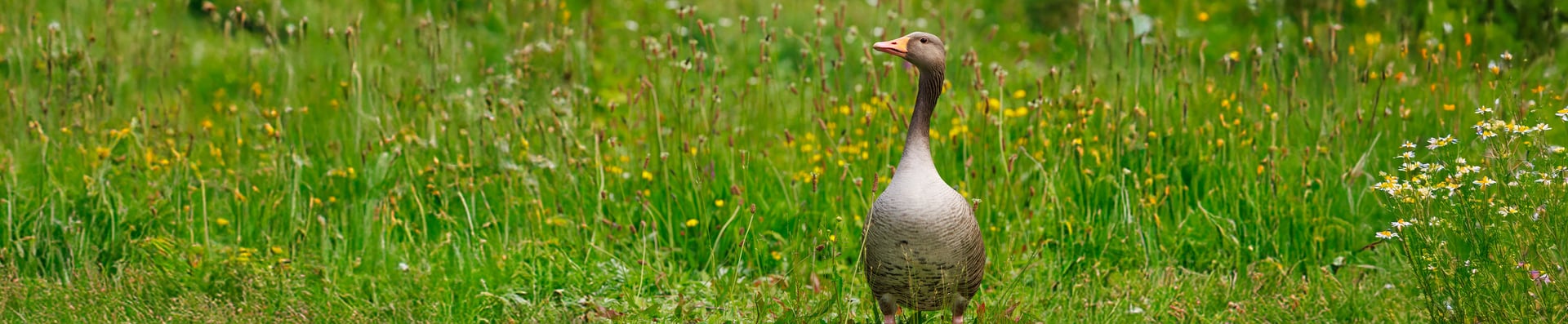
Waterfowl
Discover 18 waterfowl species, from colorful ducks to majestic swans.


Waterfowl FAQs
Quick answers to the things people most often ask about waterfowl.
Waterfowl are ducks, geese, and swans, which belong to the family Anatidae. They typically have webbed feet and broad bills. The Eurasian Coot is included here for its similar habits, although it is strictly a member of the rail family.
Swans are the largest, with the longest necks, while geese are mid-sized and often graze on land. Ducks are generally smaller, and in many species the males are far more colourful than the females.
Waterfowl preen constantly, spreading oil from a gland near the tail across their feathers. Combined with tightly interlocking feathers, this keeps water out, while soft down underneath provides insulation.
Swans and geese usually form long-lasting pair bonds and often raise their young together. Most ducks are different, forming new pairs each season, with the female usually raising the ducklings alone.
No. Many, such as the Emperor Goose and White-fronted Goose, travel long distances from northern breeding grounds. Others stay close to home all year, including the Nene, which lives only in the Hawaiian Islands.
Waterfowl photography: ducks, geese & swans
Waterfowl are often the birds people notice first, but they reward closer attention. This collection covers ducks, geese, and swans photographed across different environments, showing how varied this group becomes once you look beyond the familiar silhouettes.
Alongside the images, the profiles help place each species in its ecological setting, whether it is a migratory visitor, a resident wetland bird, or a conservation priority. For more wetland species, continue into wading birds or browse all birds.
Waterfowl are deeply woven into human history and culture, yet their wild lives remain full of surprises. As I continue to expand this gallery, I focus on capturing the intricacies of their migrations, social bonds, and remarkable adaptations to aquatic life. I regularly add new species and fresh observations, making this a continuously evolving resource for nature lovers and birdwatchers alike.