Wallace's Hawk-Eagle
A small, crested forest eagle of Southeast Asian lowland rainforests, noted for its agile canopy hunting and vulnerable status.
- Lifespan
- 15-20 years
- Habitat
- Primary and mature secondary lowland rainforest
- Diet
- Lizards, small birds, bats, frogs, small mammals
- Region
- Southeast Asia (Malay Peninsula, Sumatra, Borneo)
01 — Gallery
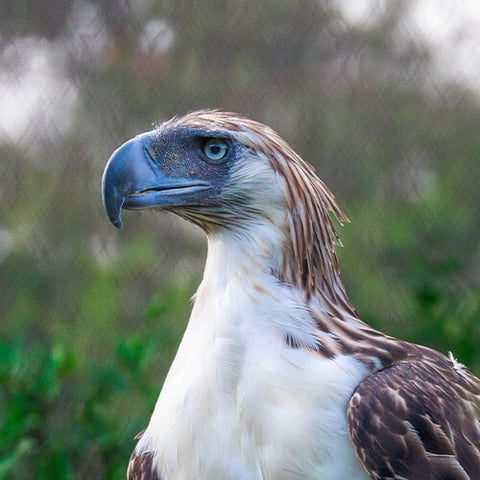
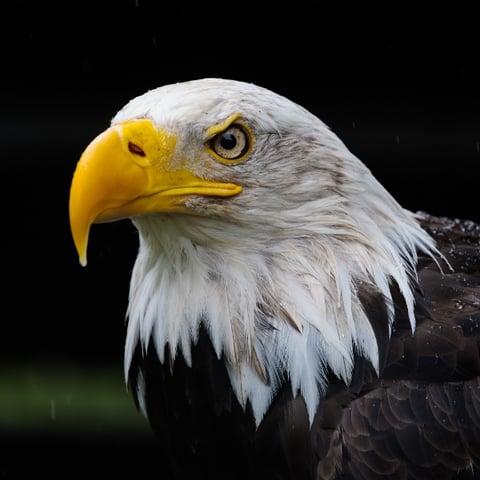
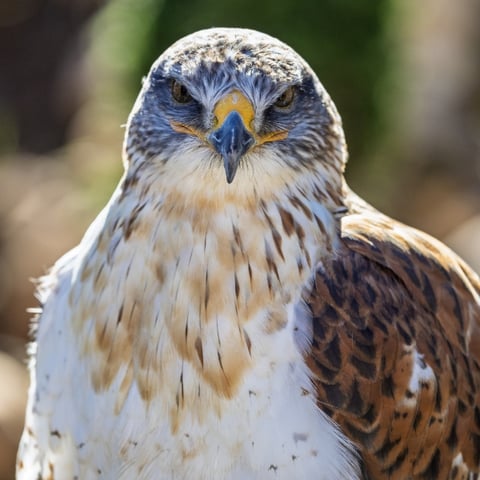
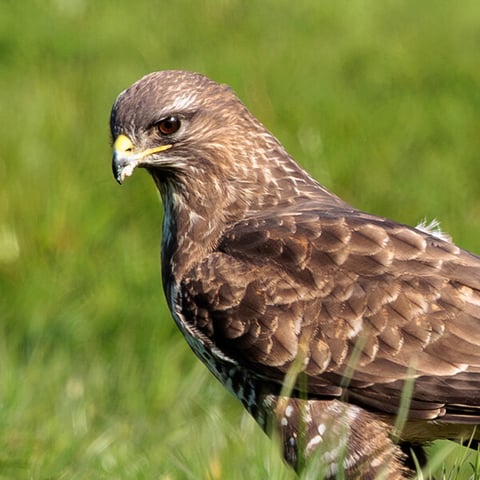
Wallace's Hawk-Eagle photographs
Select a photograph to view it full size.
02 — Field guide
Getting to know the Wallace's Hawk-Eagle
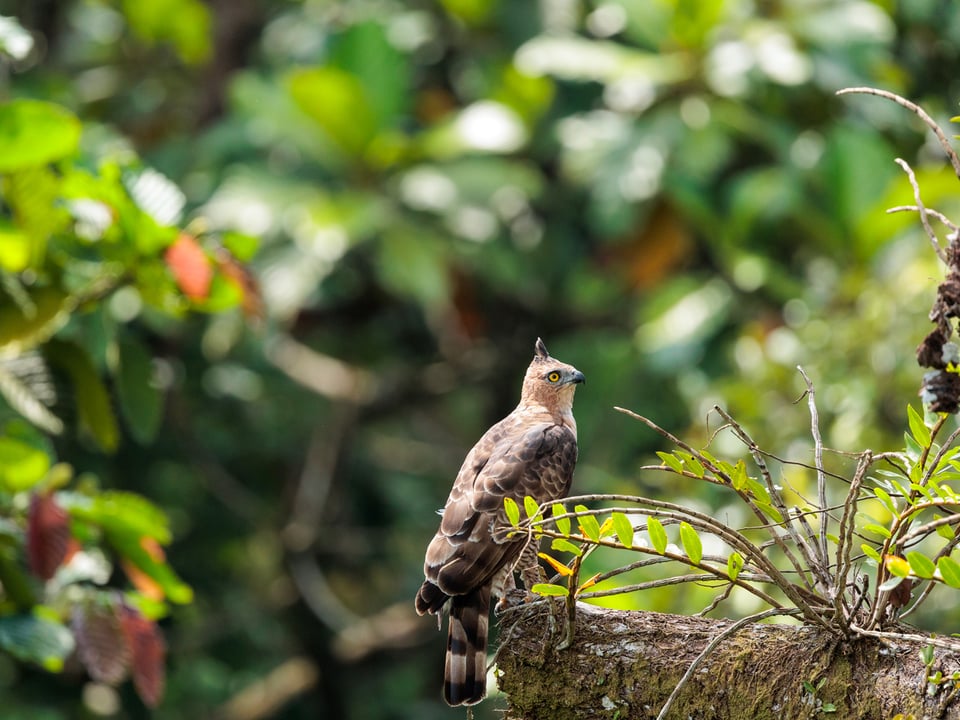
Wallace's Hawk-Eagle is one of the smallest eagle species in the world, native to the dense lowland rainforests of Sundaland in Southeast Asia. It features rich rufous-brown plumage, a prominent feathered crest, finely barred underparts, and piercing golden-yellow eyes. An agile forest hunter, it manoeuvres deftly through dense jungle canopies to ambush reptiles, bats, and small birds. Severe habitat loss and forest fragmentation across its lowland range have led to declining populations.
Questions & answers
Wallace's Hawk-Eagle has evolved a compact body and rounded wings ideally suited for agility and speed within the dense, crowded canopy of tropical rainforests rather than soaring over open landscapes.
It is native to the Sundaic lowland rainforests of Southeast Asia, including southern Myanmar, southern Thailand, Peninsular Malaysia, Sumatra, and Borneo.
It was named in honour of Alfred Russel Wallace, the 19th-century British naturalist and explorer who independently formulated the theory of evolution by natural selection.
The Wallace's Hawk-Eagle is usually solitary or monogamous pairs.
The Wallace's Hawk-Eagle is typically diurnal.
The Wallace's Hawk-Eagle is resident.
The main threats facing the Wallace's Hawk-Eagle include Lowland deforestation and logging, Agricultural expansion (oil palm), Forest fires and fragmentation, and Illegal wildlife trade.
The Wallace's Hawk-Eagle population trend is currently decreasing.
Well-known places to look for the Wallace's Hawk-Eagle include Danum Valley Conservation Area (Sabah, Borneo), Taman Negara National Park (Peninsular Malaysia), Way Kambas National Park (Sumatra, Indonesia), and Deramakot Forest Reserve (Sabah, Borneo).
Natural predators of the Wallace's Hawk-Eagle include Larger raptors, Arboreal snakes (on eggs and nestlings), and Civets (on nests).
Named after Alfred Russel Wallace, the legendary naturalist whose work across the Malay Archipelago laid crucial foundations for evolutionary biology and biogeography.
The Wallace's Hawk-Eagle is part of the Accipitridae family and an Accipitriformes order.
The Wallace's Hawk-Eagle weighs about 0.55 kg, stands around 46 cm tall, reaches about 48 cm in length, and has a wingspan of about 100 cm.
The Wallace's Hawk-Eagle can reach speeds of around 70 km/h.