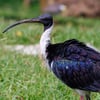
Straw-necked Ibis
Threskiornis spinicollis
Also known as: Australian Straw-necked Ibis
The Straw-necked Ibis (*Threskiornis spinicollis*) is a large Australian wading bird recognised by its dark glossy body, long downcurved bill, and the pale straw-like feathers that appear around the neck during the breeding season. It frequents wetlands, flooded grasslands, and agricultural areas, where it feeds on insects, frogs, crustaceans, and other small prey while probing in mud or short vegetation.
Straw-necked Ibis Quick Facts
Frequently Asked Questions About the Straw-necked Ibis
The Straw-necked Ibis is nomadic and is associated with Wetlands, floodplains, grasslands, farmland in Australia, Tasmania, New Guinea.
The Straw-necked Ibis can be found in Australia, Tasmania, New Guinea and is most often associated with Wetlands, floodplains, grasslands, farmland.
The Straw-necked Ibis feeds on Insects, frogs, crustaceans, small reptiles and is considered a carnivore.
The Straw-necked Ibis is currently listed as Least Concern, with a stable population trend. Main threats include Wetland drainage, Drought, Pollution.
The Straw-necked Ibis is usually colonial.
The Straw-necked Ibis is typically diurnal.
The main threats facing the Straw-necked Ibis include Wetland drainage, Drought, and Pollution.
The Straw-necked Ibis population trend is currently stable.
Well-known places to look for the Straw-necked Ibis include Kakadu National Park, Murray-Darling Basin, and Queensland wetlands.
Natural predators of the Straw-necked Ibis include Raptors, Foxes, and Large gulls (eggs and chicks).
A familiar wetland bird in Australia, especially noticeable in large flocks following rain and seasonal flooding.
The Straw-necked Ibis is part of the Threskiornithidae family and a Pelecaniformes order.
The Straw-necked Ibis weighs about 1.4 kg, stands around 75 cm tall, reaches about 75 cm in length, and has a wingspan of about 110 cm.
The Straw-necked Ibis can reach speeds of around 48 km/h.