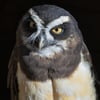
Spectacled Owl
Pulsatrix perspicillata
Also known as: Knock-away Owl
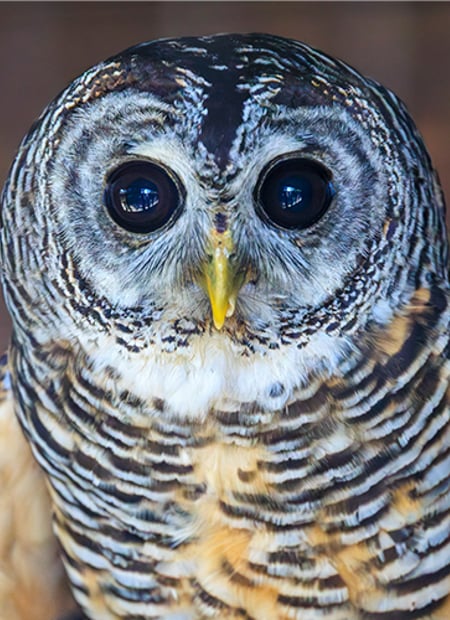
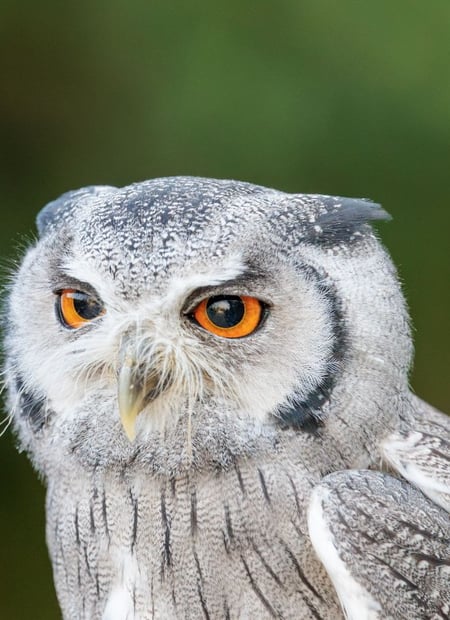
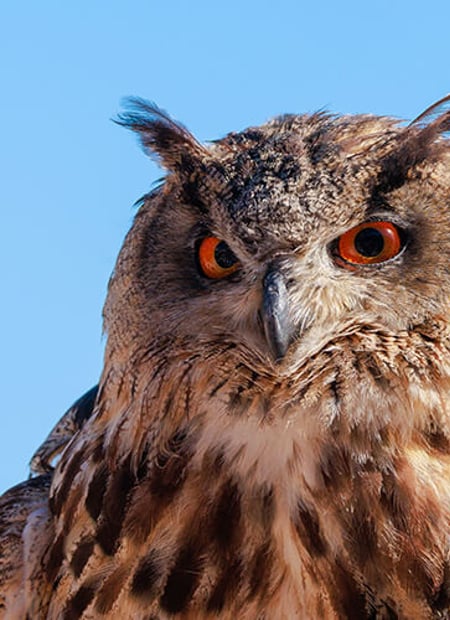
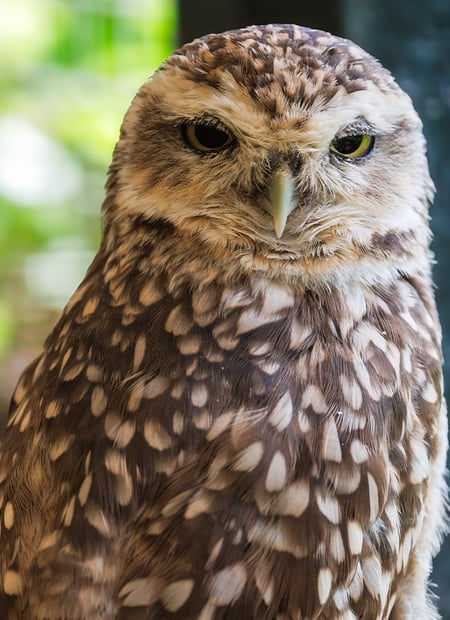
The Spectacled Owl is a medium-sized nocturnal owl native to the tropical forests of Central and South America. It has a dark face framed by pale 'spectacle' markings that give it its name and a deep, resonant hooting call.
Spectacled Owl Quick Facts
Frequently Asked Questions About the Spectacled Owl
The Spectacled Owl uses its facial disk like a sound collector, directing faint noises toward asymmetrical ear openings that help it judge exactly where prey is moving. That combination lets it detect rustling animals in darkness and strike with impressive precision.
The Spectacled Owl can be found in Central and South America and is most often associated with Tropical and subtropical forests.
The Spectacled Owl feeds on Small mammals, birds, large insects and is considered a carnivore.
The Spectacled Owl is currently listed as Least Concern, with a stable population trend. Main threats include Deforestation.
The Spectacled Owl is usually solitary.
The Spectacled Owl is typically nocturnal.
The Spectacled Owl is resident.
The main threats facing the Spectacled Owl include Deforestation.
The Spectacled Owl population trend is currently stable.
Well-known places to look for the Spectacled Owl include Costa Rica Rainforests and The Amazon.
Natural predators of the Spectacled Owl include Large hawks and Large snakes.
One of the most visually striking and recognizable owls in the tropics.
The Spectacled Owl is part of the Strigidae family and a Strigiformes order.
The Spectacled Owl weighs about 0.85 kg, stands around 45 cm tall, reaches about 46 cm in length, and has a wingspan of about 90 cm.
The Spectacled Owl can reach speeds of around 30 km/h.