Seabirds
Explore 6 species of seabirds, from clifftop puffins to coastal gulls and diving cormorants.


Seabird FAQs
Quick answers to the things people most often ask about seabirds.
Seabirds are birds that depend on the sea for much of their food, and usually breed in colonies along the coast or on islands. This section includes the Atlantic Puffin, the Great Cormorant and several species of gull.
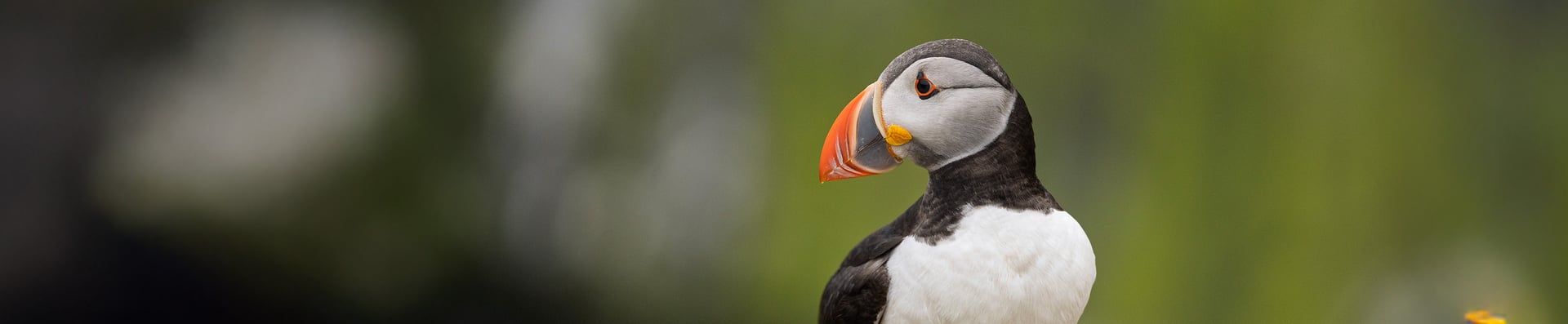
Atlantic Puffins come ashore to breed from late March to late July. Skomer Island in Pembrokeshire, the Farne Islands, the Isle of May and Shetland are among the best places to see and photograph them up close.
Not as a single species. Seagull is an informal name for the many species of gull, and several of them, such as the Black-headed Gull, spend much of their time well away from the sea.
Seabirds have specialised salt glands above their eyes that remove excess salt from the blood. The salty fluid then drains out through the nostrils, which is why it can sometimes be seen dripping from the bill.
Cormorant feathers are less waterproof than those of many other waterbirds, which helps them to dive for fish. After diving, they often perch with their wings spread, which is widely thought to help dry them.
Gulls are intelligent and adaptable, with a varied diet that readily includes food waste. Flat rooftops can also offer safe nesting sites, so species like the European Herring Gull and Lesser Black-backed Gull now breed in many towns.
Seabird photography: puffins, gulls & cormorants
Seabirds occupy the unique intersection of air, sea, and land, adapted to navigate rugged coastlines and expansive oceans. From clifftop puffin colonies to powerful, opportunistic gulls and diving cormorants, this group represents some of the most resilient and aerodynamic species in the avian world.
This section brings together puffins, cormorants, gulls and other marine-dependent species. If you want to view birds that wade through inland wetlands, check the wading birds section, or explore swimming and diving species in waterfowl. Return to the full bird archive to browse all species.
Life along oceans and coasts demands high endurance and specialized survival strategies. My growing collection of seabird photography aims to capture these moments of motion and stillness in their natural element. Capturing these coastal encounters also helps highlight the ongoing conservation challenges facing marine environments, from changing fish populations to nesting habitat disturbances.