Scarlet macaw
Ara macao
Also known as: Guacamaya roja
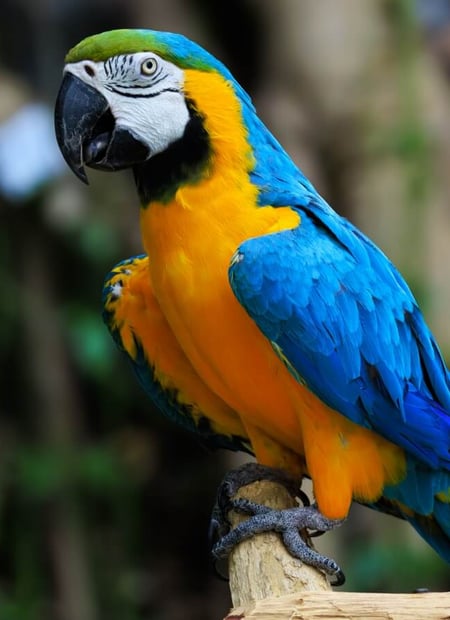
The Scarlet Macaw is a large, multi-coloured parrot native to the humid evergreen forests of Central and South America. Renowned for its brilliant plumage of red, yellow, and blue, it is a highly social bird that mates for life and is rarely seen alone. Their powerful beaks are designed to crack open hard nuts and seeds that other animals cannot access, playing a vital role in seed dispersal within their ecosystem.
Scarlet macaw Quick Facts
Frequently Asked Questions About the Scarlet macaw
The Scarlet macaw can be found in Central and South America and is most often associated with Rainforests, woodlands.
The Scarlet macaw feeds on Fruits, nuts, seeds and is considered a herbivore.
The Scarlet macaw is currently listed as Least Concern, with a decreasing population trend. Main threats include Habitat fragmentation, Poaching for pet trade.
The Scarlet macaw is usually gregarious.
The Scarlet macaw is typically diurnal.
The Scarlet macaw is resident.
The main threats facing the Scarlet macaw include Habitat fragmentation and Poaching for pet trade.
The Scarlet macaw population trend is currently decreasing.
Well-known places to look for the Scarlet macaw include Carara National Park (Costa Rica) and Tambopata (Peru).
Natural predators of the Scarlet macaw include Monkeys, Snakes, and Falcons.
National bird of Honduras.
The Scarlet macaw is part of the Psittacidae family and a Psittaciformes order.
The Scarlet macaw weighs about 1.2 kg, stands around 81 cm tall, reaches about 81 cm in length, and has a wingspan of about 115 cm.
The Scarlet macaw can reach speeds of around 56 km/h.