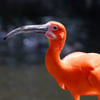
Scarlet Ibis
Eudocimus ruber
Also known as: Guará
The Scarlet Ibis (Eudocimus ruber) is a striking wading bird recognised by its brilliant crimson plumage. Found in coastal areas, mangroves and wetlands of South America and the Caribbean, the species feeds largely on crustaceans which provide the red pigments in its feathers.
Scarlet Ibis Quick Facts
Frequently Asked Questions About the Scarlet Ibis
The Scarlet Ibis is resident (Local movements) and is associated with Mangroves, mudflats, coastal lagoons, wetlands in Northern South America and the Caribbean.
The Scarlet Ibis can be found in Northern South America and the Caribbean and is most often associated with Mangroves, mudflats, coastal lagoons, wetlands.
The Scarlet Ibis feeds on Crustaceans, small fish, insects and is considered a carnivore.
The Scarlet Ibis is currently listed as Least Concern, with a stable population trend. Main threats include Pollution, Disturbance.
The Scarlet Ibis is usually colonial.
The Scarlet Ibis is typically diurnal.
The main threats facing the Scarlet Ibis include Pollution and Disturbance.
The Scarlet Ibis population trend is currently stable.
Well-known places to look for the Scarlet Ibis include Caroni Swamp (Trinidad) and Llanos of Venezuela.
Natural predators of the Scarlet Ibis include Birds of prey, Raccoons, and Cats.
The national bird of Trinidad and Tobago.
The Scarlet Ibis is part of the Threskiornithidae family and a Pelecaniformes order.
The Scarlet Ibis weighs about 0.7 kg, stands around 60 cm tall, reaches about 63 cm in length, and has a wingspan of about 95 cm.
The Scarlet Ibis can reach speeds of around 40 km/h.