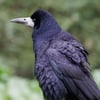
Rook
Corvus frugilegus
Also known as: Bare-faced Crow
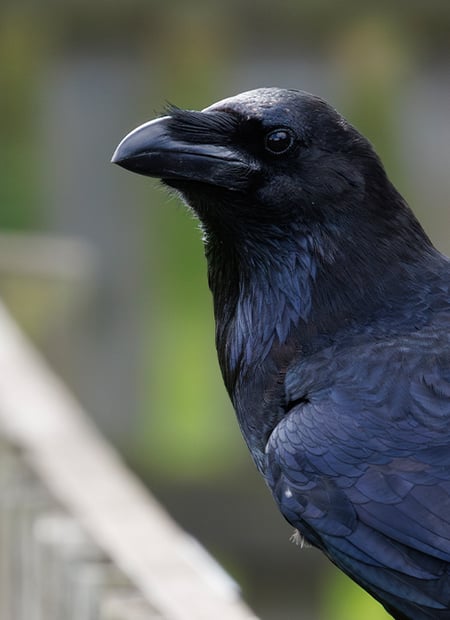
The Rook (Corvus frugilegus) is a highly gregarious, large corvid native to much of the Palearctic. Easily distinguished from other crows by the bare, greyish-white skin around the base of its robust beak in adults. They are seldom seen alone and typically nest together in the tops of tall trees in 'rookeries' that can house hundreds of birds.
Rook Quick Facts
Frequently Asked Questions About the Rook
The Rook is resident or partial migrant and is associated with Farmland, open woodland, parks, villages in Eurasia.
The Rook can be found in Eurasia and is most often associated with Farmland, open woodland, parks, villages.
The Rook feeds on Insects, earthworms, seeds, grain, carrion and is considered a omnivore.
The Rook is currently listed as Least Concern, with a decreasing population trend. Main threats include Pesticide use, Habitat loss (loss of nesting trees), Persecution.
The Rook is usually highly gregarious (flocks/rookeries).
The Rook is typically diurnal.
The main threats facing the Rook include Pesticide use, Habitat loss (loss of nesting trees), and Persecution.
The Rook population trend is currently decreasing.
Well-known places to look for the Rook include Agricultural lands in the UK and European open farmlands.
Natural predators of the Rook include Goshawks, Buzzards, Peregrine falcons, and Pine martens (on nests).
A traditional feature of the English countryside, with 'rookeries' often associated with old manor houses and village churchyards.
The Rook is part of the Corvidae family and a Passeriformes order.
The Rook weighs about 0.45 kg, stands around 45 cm tall, reaches about 47 cm in length, and has a wingspan of about 95 cm.
The Rook can reach speeds of around 55 km/h.