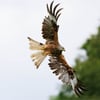
Red Kite
Milvus milvus
Also known as: Royal Kite
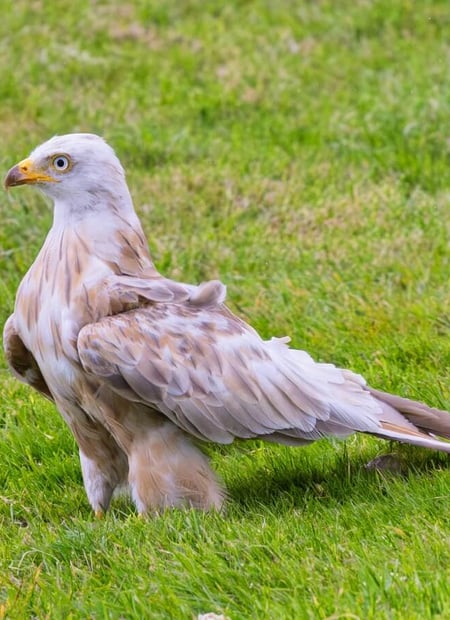
The Red Kite is an elegant bird of prey, easily identifiable by its reddish-brown body, angled wings, and deeply forked tail which it twists to steer in flight. Once driven to near-extinction in the UK, it is now a major conservation success story following reintroduction programmes. They are primarily scavengers, often seen soaring effortlessly on thermals looking for carrion, though they will also hunt small mammals and worms.
Red Kite Quick Facts
Frequently Asked Questions About the Red Kite
A Red Kite uses its long forked tail like a rudder while soaring, braking, and making fine steering adjustments in the air. That tail helps it stay exceptionally agile when gliding over farmland and woodland edges in search of carrion and small prey.
The Red Kite can be found in Europe, northwest Africa and is most often associated with Woodlands, open countryside.
The Red Kite feeds on Small mammals, carrion, worms and is considered a scavenger/predator.
The Red Kite is currently listed as Least Concern, with a increasing population trend. Main threats include Poisoning (illegal/secondary), Habitat degradation.
The Red Kite is usually loose groups.
The Red Kite is typically diurnal.
The Red Kite is partially migratory.
The main threats facing the Red Kite include Poisoning (illegal/secondary) and Habitat degradation.
The Red Kite population trend is currently increasing.
Well-known places to look for the Red Kite include Chiltern Hills (UK) and Giglio Island (Italy).
Natural predators of the Red Kite include Large owls (on nestlings) and Crows (egg thieving).
Iconic success story for British conservation.
The Red Kite is part of the Accipitridae family and an Accipitriformes order.
The Red Kite weighs about 1 kg, stands around 63 cm tall, reaches about 63 cm in length, and has a wingspan of about 185 cm.
The Red Kite can reach speeds of around 50 km/h.