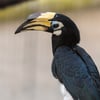
Oriental Pied Hornbill
Anthracoceros albirostris
Also known as: Sunda Pied Hornbill
The Oriental Pied Hornbill is a medium-sized, strikingly patterned bird found throughout the forests and coastal regions of the Indian Subcontinent and Southeast Asia. Easily identified by its bold black-and-white plumage and large, pale yellow bill topped with a prominent cylindrical casque, this species is incredibly adaptable. Unlike many other hornbills that strictly require deep, undisturbed primary rainforests, the Oriental Pied Hornbill can thrive in secondary forests, plantations, and even urban parks. Highly social and vocal, they are often seen moving in noisy flocks through the canopy, searching for a diverse array of fruits, large insects, and small vertebrates.
Oriental Pied Hornbill Quick Facts
Frequently Asked Questions About the Oriental Pied Hornbill
It is much more adaptable to human-altered landscapes. While large hornbills need massive, ancient trees in pristine forests to nest, the Pied Hornbill can utilize smaller cavities in secondary forests and even artificial nest boxes.
They are highly omnivorous. While wild figs form the bulk of their diet, they will happily eat large insects, lizards, and even the eggs or chicks of smaller birds.
The Oriental Pied Hornbill is usually small flocks.
The Oriental Pied Hornbill is typically diurnal.
The Oriental Pied Hornbill is resident.
The main threats facing the Oriental Pied Hornbill include Loss of large nesting trees and Hunting in some regions.
The Oriental Pied Hornbill population trend is currently stable.
Well-known places to look for the Oriental Pied Hornbill include Singapore Botanic Gardens, Khao Yai National Park (Thailand), and Kinabatangan River (Borneo).
Natural predators of the Oriental Pied Hornbill include Birds of prey and Snakes.
A symbol of successful urban wildlife conservation in Southeast Asian cities.
The Oriental Pied Hornbill is part of the Bucerotidae family and a Bucerotiformes order.
The Oriental Pied Hornbill weighs about 0.9 kg, stands around 70 cm tall, reaches about 70 cm in length, and has a wingspan of about 90 cm.
The Oriental Pied Hornbill can reach speeds of around 40 km/h.