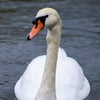
Mute Swan
Cygnus olor
Also known as: Common Swan
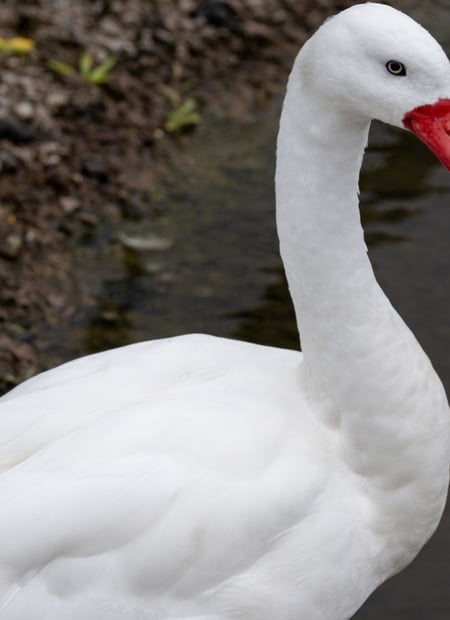
The Mute Swan is a large, graceful waterfowl native to much of Europe and Asia and introduced elsewhere. Recognisable by its white plumage, long S-shaped neck and orange bill edged in black, it frequents lakes, rivers and coastal lagoons. Despite the name, Mute Swans are not silent but are less vocal than some other swan species.
Mute Swan Quick Facts
Frequently Asked Questions About the Mute Swan
The Mute Swan is partially migratory and is associated with Freshwater lakes, rivers, marshes in Europe, Asia (introduced elsewhere).
The Mute Swan can be found in Europe, Asia (introduced elsewhere) and is most often associated with Freshwater lakes, rivers, marshes.
The Mute Swan feeds on Aquatic plants, grasses and is considered a herbivore.
The Mute Swan is currently listed as Least Concern, with a increasing population trend. Main threats include Pollution, Lead poisoning.
The Mute Swan is usually monogamous pairs/small groups.
The Mute Swan is typically diurnal.
The main threats facing the Mute Swan include Pollution and Lead poisoning.
The Mute Swan population trend is currently increasing.
Well-known places to look for the Mute Swan include River Thames (UK) and Abbotsbury Swannery.
Natural predators of the Mute Swan include Foxes (at nests) and Pike (on cygnets).
In the UK, Mute Swans are traditionally owned by the British Monarch.
The Mute Swan is part of the Anatidae family and an Anseriformes order.
The Mute Swan weighs about 11 kg, stands around 150 cm tall, reaches about 155 cm in length, and has a wingspan of about 220 cm.
The Mute Swan can reach speeds of around 80 km/h.