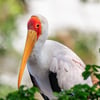
Milky Stork
Mycteria cinerea
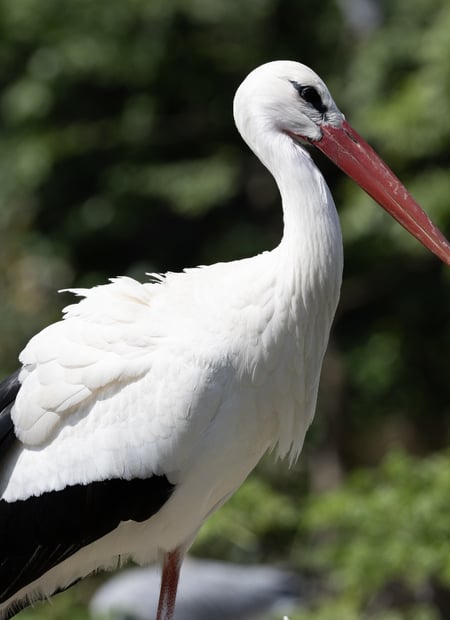
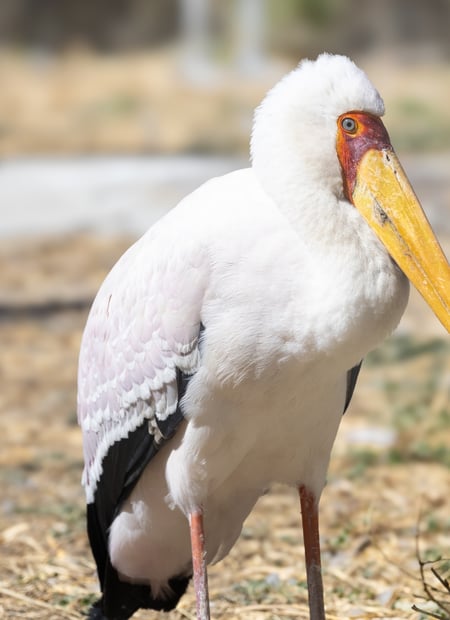
The Milky Stork is a medium-sized wading bird native to coastal wetlands, mangroves, and mudflats of Southeast Asia. It is easily distinguished by its overall white plumage, bare pinkish-red facial skin, long yellow-orange bill, and black flight feathers. Listed as Endangered, this colonial nester feeds opportunistically in shallow waters, utilizing tactile feeding strategies to capture fish, crabs, and other small aquatic organisms.
Milky Stork Quick Facts
Frequently Asked Questions About the Milky Stork
The Milky Stork is native to Southeast Asia, particularly coastal mangroves, tidal mudflats, and swampy estuaries in Indonesia, Malaysia, Cambodia, and Vietnam.
It feeds mainly on small fish (especially mudskippers), crabs, shrimp, frogs, and large insects, hunting by sweeping its partially open bill through shallow water.
The Milky Stork is listed as Endangered, with a rapidly decreasing population. The main causes of decline are coastal development, mangrove deforestation, and nest poaching.
Milky Storks are colonial breeders, nesting in large aggregations in the branches of tall trees, often sharing breeding grounds with other wading birds like herons and egrets.
The Milky Stork is usually colonial.
The Milky Stork is typically diurnal.
The Milky Stork is non-migratory/resident.
The main threats facing the Milky Stork include Habitat loss (coastal development/mangrove destruction), Hunting, and Human disturbance.
The Milky Stork population trend is currently decreasing.
Well-known places to look for the Milky Stork include Kuala Gula (Malaysia), Riau Province (Sumatra, Indonesia), and Tonle Sap (Cambodia).
Natural predators of the Milky Stork include None as adults and Crows/Raptors (on eggs/nestlings).
The Milky Stork is part of the Ciconiidae family and a Ciconiiformes order.
The Milky Stork weighs about 2.3 kg, reaches about 94 cm in length, and has a wingspan of about 160 cm.