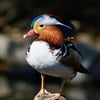
Mandarin Duck
Aix galericulata
Also known as: Oshidori
The Mandarin Duck is one of the most colourful ducks, native to East Asia. Males display spectacular plumage during the breeding season; unusually for ducks, they nest in tree cavities and are strong perchers.
Mandarin Duck Quick Facts
Frequently Asked Questions About the Mandarin Duck
The Mandarin Duck is partially migratory and is associated with Wooded ponds, rivers, and lakes in East Asia, introduced in Europe and North America.
The Mandarin Duck can be found in East Asia, introduced in Europe and North America and is most often associated with Wooded ponds, rivers, and lakes.
The Mandarin Duck feeds on Seeds, plants, insects, snails, small fish and is considered a omnivore.
The Mandarin Duck is currently listed as Least Concern, with a stable population trend. Main threats include Habitat destruction, Logging (nest trees).
The Mandarin Duck is usually pairs/small flocks.
The Mandarin Duck is typically diurnal.
The main threats facing the Mandarin Duck include Habitat destruction and Logging (nest trees).
The Mandarin Duck population trend is currently stable.
Well-known places to look for the Mandarin Duck include Richmond Park (UK - feral) and Parks in East Asia.
Natural predators of the Mandarin Duck include Snakes, Mink, and Raccoons.
A common symbol of weddings and happy marriages in Asia.
The Mandarin Duck is part of the Anatidae family and an Anseriformes order.
The Mandarin Duck weighs about 0.5 kg, stands around 45 cm tall, reaches about 45 cm in length, and has a wingspan of about 72 cm.
The Mandarin Duck can reach speeds of around 50 km/h.