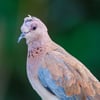
Laughing Dove
Spilopelia senegalensis
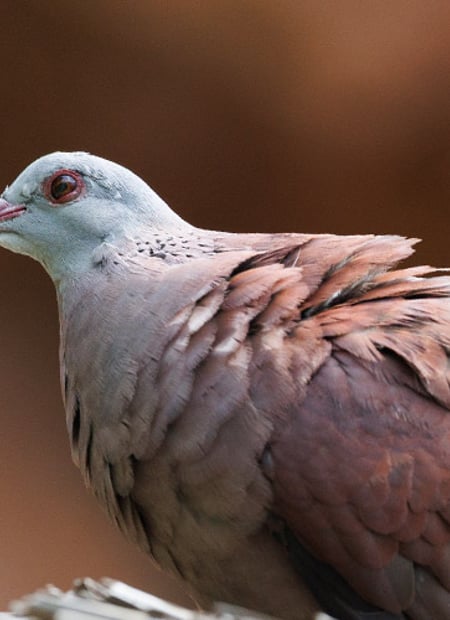
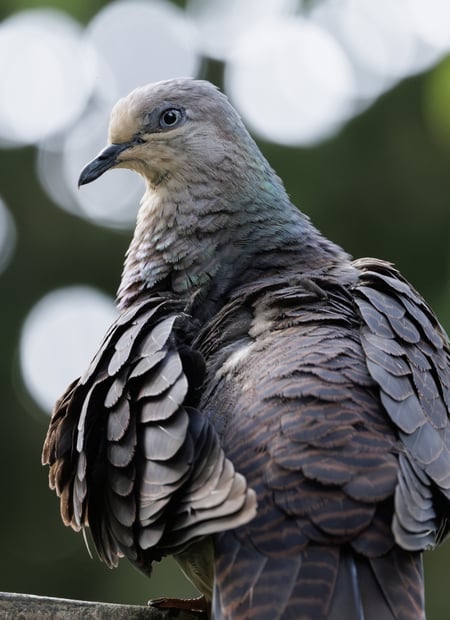
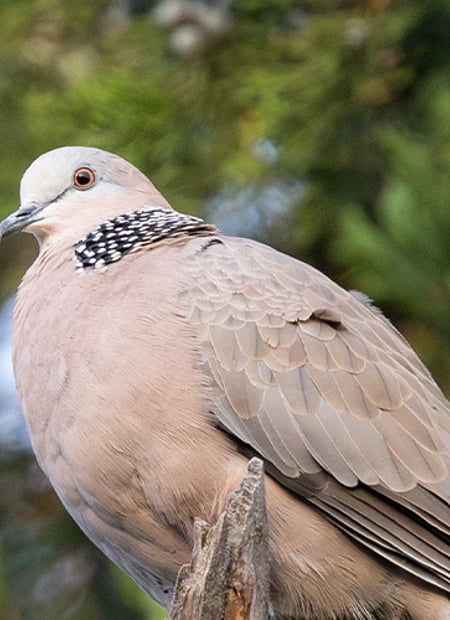
The Laughing Dove is a small, slender dove widely distributed across Sub-Saharan Africa, the Middle East, and South Asia. Named for its soft, bubbling call that resembles gentle laughter, it is one of the most familiar doves in urban and suburban settings. Its warm rufous-brown plumage, speckled black-and-white necklace patch, and blue-grey wing panels make it easy to identify. Highly adaptable, it thrives in gardens, farmland, and open woodland, often feeding on the ground in small flocks.
Laughing Dove Quick Facts
Frequently Asked Questions About the Laughing Dove
The Laughing Dove is found across Sub-Saharan Africa, the Middle East, and South Asia, favouring open woodland, scrubland, gardens, and urban areas.
It feeds mainly on small seeds and grains gathered from the ground, occasionally supplementing its diet with small insects and invertebrates.
The name comes from its distinctive soft, bubbling coo that sounds remarkably like gentle human laughter.
The Laughing Dove is listed as Least Concern by the IUCN, with a stable population. It is well adapted to human-modified environments and is common in many cities and towns.
The Laughing Dove is usually pairs and small flocks.
The Laughing Dove is typically diurnal.
The Laughing Dove is non-migratory/resident.
The main threats facing the Laughing Dove include Habitat loss and Trapping for the pet trade.
The Laughing Dove population trend is currently stable.
Well-known places to look for the Laughing Dove include Kruger National Park (South Africa), Rift Valley (Kenya), and Mumbai (India).
Natural predators of the Laughing Dove include Raptors, Cats, and Snakes.
The Laughing Dove is part of the Columbidae family and a Columbiformes order.
The Laughing Dove weighs about 0.09 kg, reaches about 25 cm in length, and has a wingspan of about 40 cm.