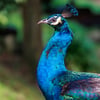
Indian Peafowl
Pavo cristatus
Also known as: Blue Peafowl, Common Peafowl
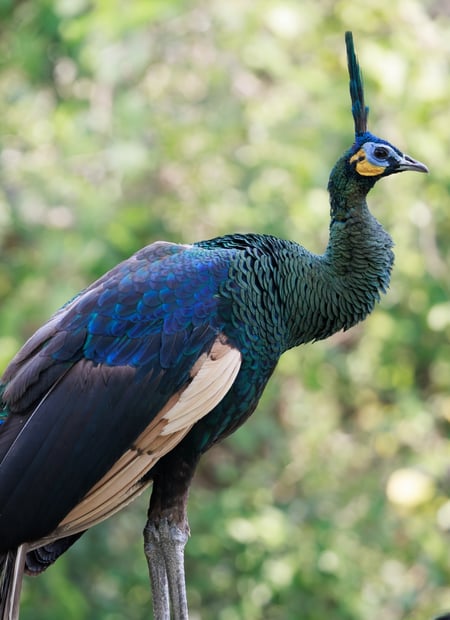
The Indian Peafowl is a large, spectacular gamebird native to South Asia but widely introduced in parks and estates worldwide. The male (peacock) is renowned for his iridescent blue neck and head, and a magnificent, elongated tail covert train adorned with colourful eye-spots (ocelli) that he fans out during courtship displays. The female (peahen) is much smaller and lacks the long train, sporting a muted brown plumage with metallic green neck feathers to remain camouflaged while nesting on the ground.
Indian Peafowl Quick Facts
Frequently Asked Questions About the Indian Peafowl
Yes, despite their large size and the peacock's long train, they can fly. They typically fly short distances to escape danger or to roost in trees at night.
No, only the males (peacocks) have the train. Females (peahens) are brown and grey to stay camouflaged while protecting their eggs.
The Indian Peafowl is usually small groups (harem).
The Indian Peafowl is typically diurnal.
The Indian Peafowl is resident.
The main threats facing the Indian Peafowl include Poaching for feathers, Habitat encroachment, and Feral dogs.
The Indian Peafowl population trend is currently stable.
Well-known places to look for the Indian Peafowl include Keoladeo National Park (India), Yala National Park (Sri Lanka), and Ranthambore National Park (India).
Natural predators of the Indian Peafowl include Tigers, Leopards, Jackals, and Stray dogs.
The National Bird of India, associated with royalty, divinity, and classical mythology.
The Indian Peafowl is part of the Phasianidae family and a Galliformes order.
The Indian Peafowl weighs about 5 kg, stands around 100 cm tall, reaches about 210 cm in length, and has a wingspan of about 150 cm.
The Indian Peafowl can reach speeds of around 16 km/h.