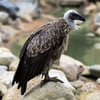
Griffon Vulture
Gyps fulvus
Also known as: Eurasian Griffon
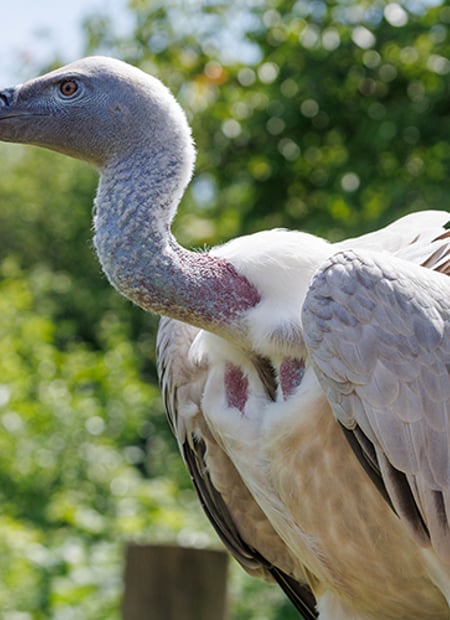
The Griffon Vulture is a magnificent scavenger of the Old World, known for its immense wingspan and soaring flight. They live in colonies on steep cliffs and travel huge distances over open country to locate carcasses, often relying on other birds to spot food first. Their highly acidic stomachs allow them to safely digest rotting meat that would be toxic to other animals.
Griffon Vulture Quick Facts
Frequently Asked Questions About the Griffon Vulture
Griffon Vultures are masters of energy-efficient flight, using rising warm air and air currents along cliffs to gain height with very little flapping. By linking thermals and glides, they can cover huge distances while searching for food without wasting much energy.
The Griffon Vulture can be found in Europe, Asia, Africa and is most often associated with Cliffs, mountains, open countryside.
The Griffon Vulture feeds on Carrion and is considered a scavenger.
The Griffon Vulture is currently listed as Least Concern, with a increasing population trend. Main threats include Poisoning, Electrocution (power lines).
The Griffon Vulture is usually colonial.
The Griffon Vulture is typically diurnal.
The Griffon Vulture is resident/partial migratory.
The main threats facing the Griffon Vulture include Poisoning and Electrocution (power lines).
The Griffon Vulture population trend is currently increasing.
Well-known places to look for the Griffon Vulture include Monfragüe National Park (Spain) and Gamla (Israel).
Natural predators of the Griffon Vulture include Humans (poisoning).
Essential ecosystem cleaner in Mediterranean landscapes.
The Griffon Vulture is part of the Accipitridae family and an Accipitriformes order.
The Griffon Vulture weighs about 9 kg, stands around 110 cm tall, reaches about 112 cm in length, and has a wingspan of about 250 cm.
The Griffon Vulture can reach speeds of around 75 km/h.