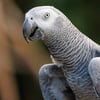
Grey Parrot
Psittacus erithacus
Also known as: African Grey Parrot, Congo Grey Parrot
The Grey Parrot, often called the African Grey Parrot, is a medium-sized parrot native to the lowland rainforests of West and Central Africa. It has soft ash-grey plumage with pale scalloped edging, a bare whitish face around pale yellow eyes, a black hooked bill and a striking bright red tail. Widely regarded as one of the most intelligent birds in the world, it is a remarkable mimic of sounds and human speech. Wild populations have declined sharply due to trapping for the pet trade and the loss of forest habitat.
Grey Parrot Quick Facts
Frequently Asked Questions About the Grey Parrot
The Grey Parrot is native to the lowland rainforests of West and Central Africa, from Côte d'Ivoire east to Kenya and south to northern Angola.
Millions of wild Grey Parrots have been trapped for the international pet trade, and deforestation has destroyed much of their habitat. In 2017 they were added to CITES Appendix I, banning international commercial trade in wild-caught birds.
Yes. Grey Parrots are among the best mimics in the bird world and can learn a large vocabulary of words and sounds. Research suggests some individuals can use words with an understanding of their meaning.
The Grey Parrot is usually large communal roosts, monogamous pairs.
The Grey Parrot is typically diurnal.
The Grey Parrot is resident.
The main threats facing the Grey Parrot include Capture for pet trade, Deforestation, and Habitat loss.
The Grey Parrot population trend is currently decreasing.
Well-known places to look for the Grey Parrot include Príncipe Island (São Tomé and Príncipe), Lobéké National Park (Cameroon), and Dzanga-Sangha Reserve (Central African Republic).
Natural predators of the Grey Parrot include Palm-nut vultures, Birds of prey, and Monkeys (on nests).
One of the most popular pet parrots in the world, and a key species in research into animal intelligence and language.
The Grey Parrot is part of the Psittacidae family and a Psittaciformes order.
The Grey Parrot weighs about 0.4 kg, reaches about 33 cm in length, and has a wingspan of about 50 cm.