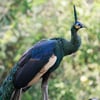
Green Peafowl
Pavo muticus
Also known as: Dragonbird, Thai Peafowl
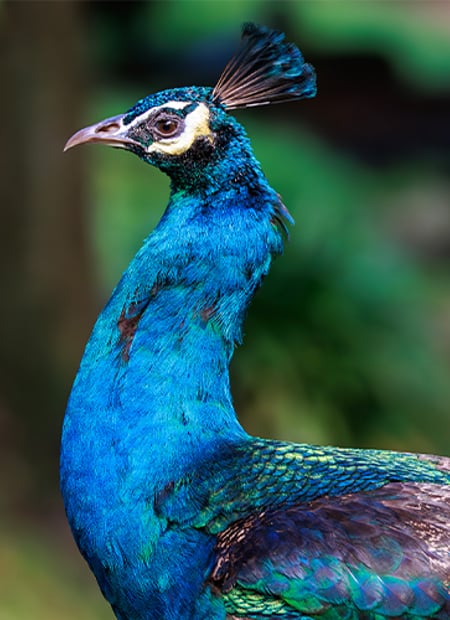
The Green Peafowl is a stunningly beautiful bird native to the tropical forests of Southeast Asia. Unlike its Indian cousin (the Blue Peafowl), both males and females have green iridescent neck feathers, and they are stronger flyers. It is an endangered species due to hunting and habitat destruction, making it much rarer in the wild.
Green Peafowl Quick Facts
Frequently Asked Questions About the Green Peafowl
The Green Peafowl can be found in Southeast Asia and is most often associated with Tropical forests, wetlands.
The Green Peafowl feeds on Seeds, fruits, small animals and is considered a omnivore.
The Green Peafowl is currently listed as Endangered, with a decreasing population trend. Main threats include Hunting, Habitat loss, Agriculture.
The Green Peafowl is usually small groups (harem).
The Green Peafowl is typically diurnal.
The Green Peafowl is resident.
The main threats facing the Green Peafowl include Hunting, Habitat loss, and Agriculture.
The Green Peafowl population trend is currently decreasing.
Well-known places to look for the Green Peafowl include Huai Kha Khaeng (Thailand) and Java (Indonesia).
Natural predators of the Green Peafowl include Leopards, Tigers, and Pythons.
Symbol of nobility and beauty in many Southeast Asian cultures.
The Green Peafowl is part of the Phasianidae family and a Galliformes order.
The Green Peafowl weighs about 4.5 kg, stands around 110 cm tall, reaches about 250 cm in length, and has a wingspan of about 150 cm.
The Green Peafowl can reach speeds of around 16 km/h.