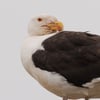
Great Black-backed Gull
Larus marinus
Also known as: Great Black-back Gull, Black-back
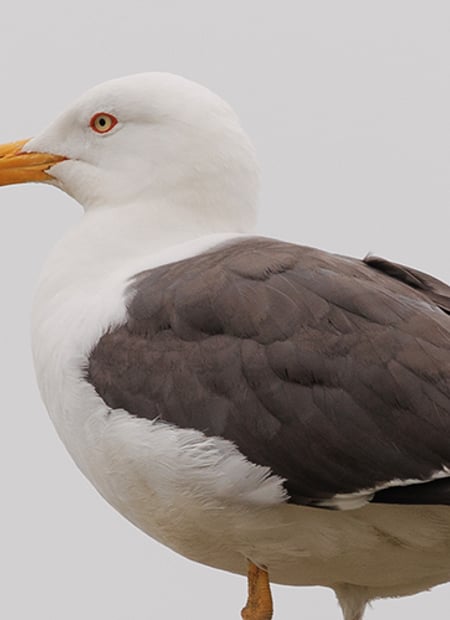
The Great Black-backed Gull (Larus marinus) is the largest member of the gull family, native to the coasts of the North Atlantic. Recognizable by its dark slate-black back, white head and underparts, and powerful yellow bill with a prominent red spot, it is a formidable apex predator among seabirds. Highly opportunistic and aggressive, they feed on a diverse diet ranging from fish and marine invertebrates to other adult seabirds, eggs, and chicks.
Great Black-backed Gull Quick Facts
Frequently Asked Questions About the Great Black-backed Gull
The Great Black-backed Gull is a resident or partial migrant, dispersing south along coasts during winter from the northernmost parts of its breeding range.
The Great Black-backed Gull can be found in coastal areas across the North Atlantic, including Eastern North America and Western Europe.
The Great Black-backed Gull feeds on fish, marine invertebrates, other seabirds, carrion, rodents, and refuse, and is considered an opportunistic omnivore.
The Great Black-backed Gull is currently listed as Least Concern, though local populations are monitored due to threats like avian influenza, oil spills, and plastic pollution.
The Great Black-backed Gull is usually solitary or colonial (breeds in loose colonies).
The Great Black-backed Gull is typically diurnal.
The main threats facing the Great Black-backed Gull include Avian influenza, Oil spills, Plastic pollution, and Habitat degradation.
The Great Black-backed Gull population trend is currently stable.
Well-known places to look for the Great Black-backed Gull include Isle of May (Scotland), Maine coast (USA), and Coastal cliffs of Newfoundland (Canada).
Natural predators of the Great Black-backed Gull include Bald eagles, Red foxes (on nests), and Other large birds of prey (on eggs/chicks).
The largest member of the gull family, known for its powerful build and predatory nature, often appearing in folklore as a symbol of coastal wildness.
The Great Black-backed Gull is part of the Laridae family and a Charadriiformes order.
The Great Black-backed Gull weighs about 1.6 kg, stands around 70 cm tall, reaches about 70 cm in length, and has a wingspan of about 160 cm.
The Great Black-backed Gull can reach speeds of around 65 km/h.