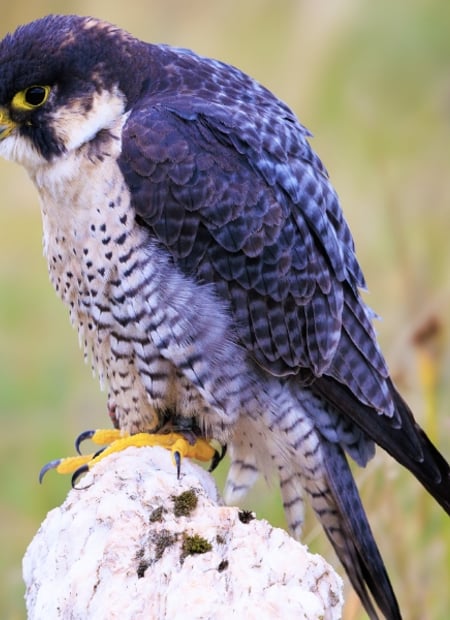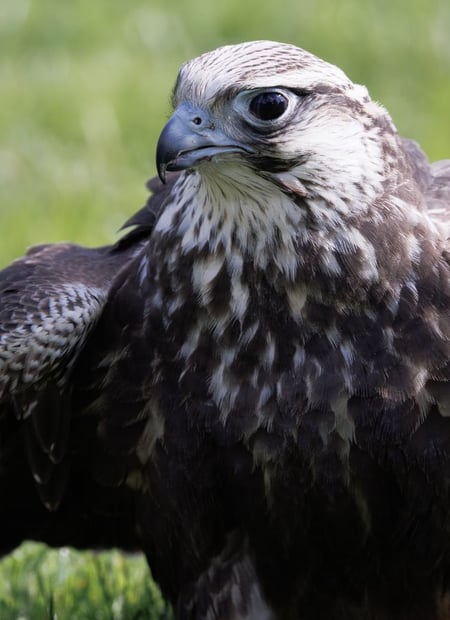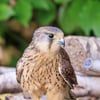
Eurasian Kestrel
Falco tinnunculus
Also known as: Common Kestrel, Windhover
The Eurasian Kestrel is a familiar small falcon often seen hovering stationary in the air ('windhovering') beside motorways and over farmland. They have the remarkable ability to see near-ultraviolet light, allowing them to track voles by detecting the trails of urine they leave in the grass.
Eurasian Kestrel Quick Facts
Frequently Asked Questions About the Eurasian Kestrel
Eurasian Kestrels face into the wind and make constant fine adjustments with their wings and tail to hold position over one spot. This hovering lets them scan the ground carefully for small mammals before dropping suddenly onto prey.
The Eurasian Kestrel can be found in Europe, Asia, Africa and is most often associated with Open country, farmland, cliffs.
The Eurasian Kestrel feeds on Insects, small mammals, birds and is considered a carnivore.
The Eurasian Kestrel is currently listed as Least Concern, with a decreasing population trend. Main threats include Intensive agriculture, Loss of nesting sites.
The Eurasian Kestrel is usually solitary.
The Eurasian Kestrel is typically diurnal.
The Eurasian Kestrel is resident/partial migratory.
The main threats facing the Eurasian Kestrel include Intensive agriculture and Loss of nesting sites.
The Eurasian Kestrel population trend is currently decreasing.
Well-known places to look for the Eurasian Kestrel include Peak District (UK) and Farmland across Europe.
Natural predators of the Eurasian Kestrel include Large hawks and Large owls.
A common sight for commuters, hovering over motorway verges.
The Eurasian Kestrel is part of the Falconidae family and a Falconiformes order.
The Eurasian Kestrel weighs about 0.2 kg, stands around 35 cm tall, reaches about 36 cm in length, and has a wingspan of about 75 cm.
The Eurasian Kestrel can reach speeds of around 60 km/h.