Eurasian Collared Dove
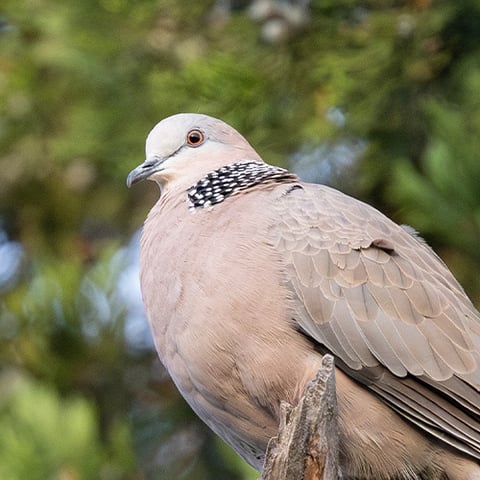
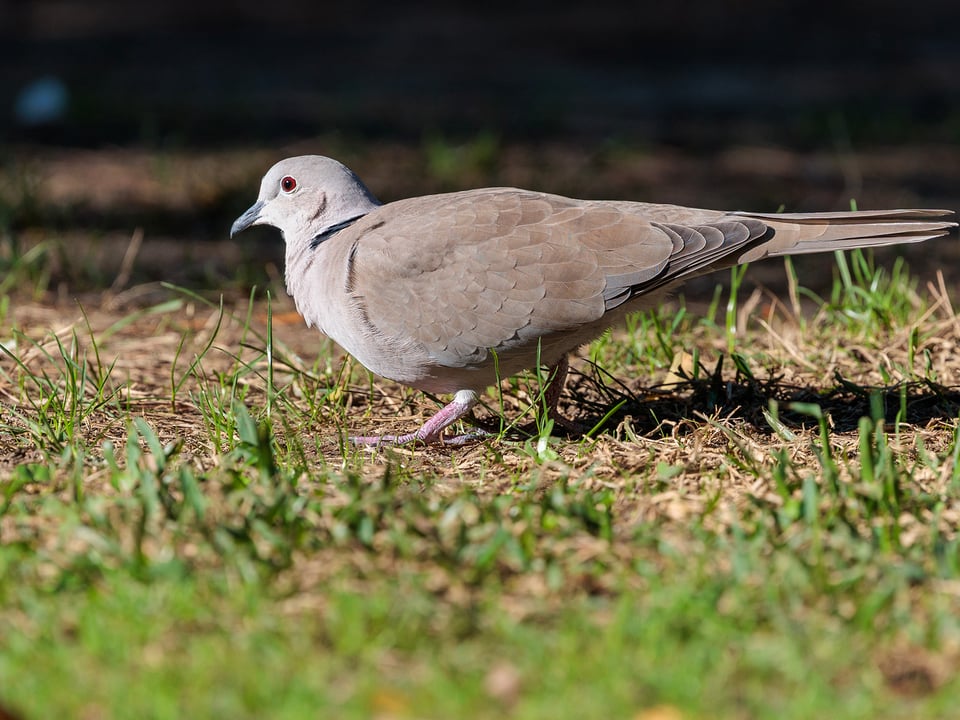
A pale, sandy-grey dove with a black neck collar that spread across Europe in the 20th century.
- Lifespan
- Around 3 years (wild)
- Habitat
- Towns, villages, gardens, parks and farmland
- Diet
- Seeds, grain, berries and shoots
- Region
- Europe, Asia and North Africa; introduced to North America
01 — Gallery
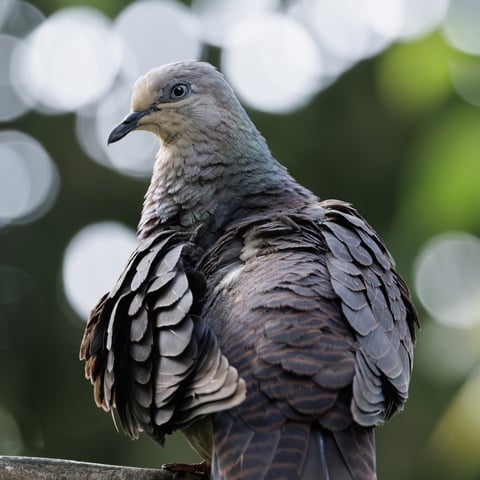
Eurasian Collared Dove photographs
Select a photograph to view it full size.
02 — Field guide
Getting to know the Eurasian Collared Dove
The Eurasian Collared Dove is a slim, sandy-grey dove with a narrow black half-collar on the back of its neck. Originally from south-west Asia, it spread across Europe during the 20th century, reaching Britain in the 1950s, and has since colonised North America after being introduced to the Bahamas. It is now a common sight in towns, villages and farmland, where its repetitive three-note 'coo-COO-coo' call is a familiar sound.
Questions & answers
From the Balkans it spread north-west across Europe in the 20th century, helped by its ability to breed almost year-round and its close association with people, farms and grain stores. It first bred in Britain in 1955.
It is found across Europe, much of Asia and parts of North Africa, and has spread widely across North America. It favours towns, villages, gardens and farmland rather than wild habitats.
It feeds mainly on seeds and cereal grain, often on the ground beneath bird feeders, and also eats berries and green shoots.
The Eurasian Collared Dove is listed as Least Concern. Its range and population have grown dramatically over the past century.
The Eurasian Collared Dove is usually usually in pairs; gathers in flocks at good feeding sites in winter.
The Eurasian Collared Dove is typically diurnal.
The Eurasian Collared Dove is largely resident, though young birds disperse long distances.
The main threats facing the Eurasian Collared Dove include Predation by cats and birds of prey and Collisions with vehicles and windows.
The Eurasian Collared Dove population trend is currently increasing.
Well-known places to look for the Eurasian Collared Dove include Suburban gardens and villages across the UK and Europe and Farmyards and grain stores.
Natural predators of the Eurasian Collared Dove include Sparrowhawks, Cats, and Magpies and crows (eggs and chicks).
Its scientific name 'decaocto' (Greek for eighteen) comes from a legend of a servant paid eighteen coins a year whose prayers were answered when the gods turned her into a dove that still calls out the number.
The Eurasian Collared Dove is part of the Columbidae family and a Columbiformes order.
The Eurasian Collared Dove weighs about 0.2 kg, stands around 32 cm tall, reaches about 32 cm in length, and has a wingspan of about 51 cm.