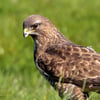
Common Buzzard
Buteo buteo
Also known as: Eurasian Buzzard
The Common Buzzard (*Buteo buteo*) is one of the most widespread and numerous birds of prey in the UK and Europe. A medium-to-large raptor with broad, rounded wings and a short neck, it is a master of soaring flight often seen circling on thermals above woodlands and farmland. Its plumage varies greatly from pale cream to dark brown, making individual birds highly distinctive. The buzzard's mewing call, reminiscent of a cat, is one of the most evocative sounds of the British countryside.
Common Buzzard Quick Facts
Frequently Asked Questions About the Common Buzzard
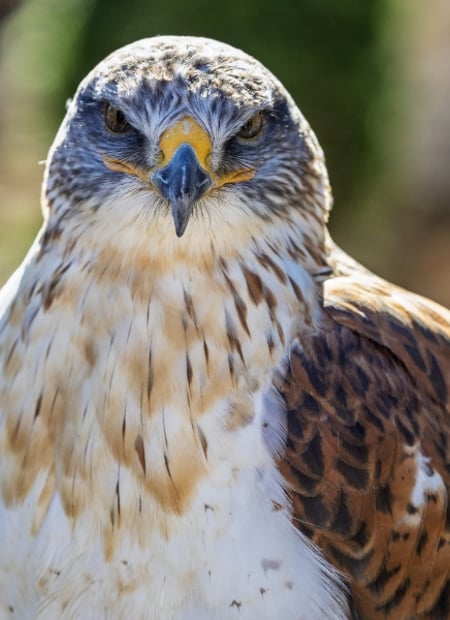
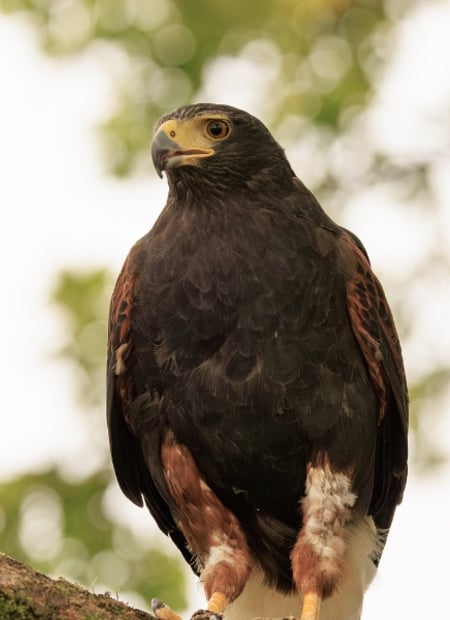
Common Buzzards are famously variable in plumage, ranging from very dark birds to strikingly pale ones. Even with that variation, they usually keep the same broad-winged shape, shallow V-shaped glide, and dark wingtips that make them recognisable in flight.
The Common Buzzard can be found in Europe, Asia, North Africa and is most often associated with Woodland edges, farmland, moorland, uplands.
The Common Buzzard feeds on Small mammals, carrion, earthworms, rabbits and is considered a carnivore.
The Common Buzzard is currently listed as Least Concern, with a increasing population trend. Main threats include Illegal persecution, Habitat loss, Rodenticide poisoning.
The Common Buzzard is usually solitary or pairs.
The Common Buzzard is typically diurnal.
The Common Buzzard is partial migrant.
The main threats facing the Common Buzzard include Illegal persecution, Habitat loss, and Rodenticide poisoning.
The Common Buzzard population trend is currently increasing.
Well-known places to look for the Common Buzzard include Welsh uplands, Scottish Highlands, and South West England.
Natural predators of the Common Buzzard include Golden Eagle and Goshawk.
The most frequently sighted large raptor in the British Isles, symbolising the recovery of UK birds of prey following decades of persecution.
The Common Buzzard is part of the Accipitridae family and an Accipitriformes order.
The Common Buzzard weighs about 0.9 kg, stands around 54 cm tall, reaches about 54 cm in length, and has a wingspan of about 122 cm.
The Common Buzzard can reach speeds of around 65 km/h.