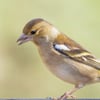
Chaffinch
Fringilla coelebs
Also known as: Common Chaffinch
The Chaffinch (*Fringilla coelebs*) is one of the most common and widespread birds across Europe, Asia, and North Africa. Known for its distinctive 'pink-pink' call and the males' vibrant blue-grey cap and reddish-pink underparts, they are frequently seen in woods, gardens, and farmland. During winter, they often form large flocks, and their powerful beak is perfectly adapted for eating seeds and insects.
Chaffinch Quick Facts
Frequently Asked Questions About the Chaffinch
The Chaffinch is short-distance migrant/Resident and is associated with Woodlands, gardens, farmland in Europe, Asia, North Africa.
The Chaffinch can be found in Europe, Asia, North Africa and is most often associated with Woodlands, gardens, farmland.
The Chaffinch feeds on Seeds, insects (during breeding) and is considered a omnivore.
The Chaffinch is currently listed as Least Concern, with a stable population trend. Main threats include Habitat loss, Predation.
The Chaffinch is usually gregarious in winter.
The Chaffinch is typically diurnal.
The main threats facing the Chaffinch include Habitat loss and Predation.
The Chaffinch population trend is currently stable.
Well-known places to look for the Chaffinch include European woodlands and British gardens.
Natural predators of the Chaffinch include Cats, Hawks, and Magpies (on eggs).
A familiar garden bird often used as a symbol of the arrival of spring.
The Chaffinch is part of the Fringillidae family and a Passeriformes order.
The Chaffinch weighs about 0.02 kg, stands around 14.5 cm tall, reaches about 14.5 cm in length, and has a wingspan of about 26 cm.
The Chaffinch can reach speeds of around 45 km/h.