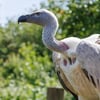
Cape Vulture
Gyps coprotheres
Also known as: Cape Griffon
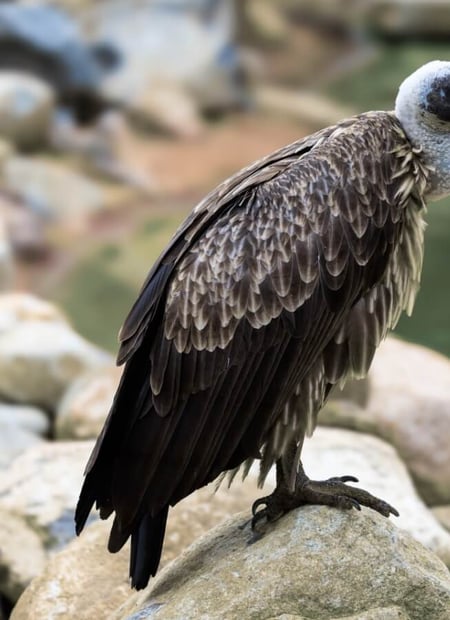
The Cape Vulture is a large Old World vulture native to the mountains and open grasslands of Southern Africa. A highly social species, it breeds and roosts in large colonies on sheer cliff faces, often numbering hundreds of pairs, and relies on thermal updrafts to travel vast distances in search of carrion. As an obligate scavenger, it plays a critical ecological role in cleaning carcasses from the landscape, helping to limit the spread of disease among wild and domestic animals alike.
Cape Vulture Quick Facts
Frequently Asked Questions About the Cape Vulture
The Cape Vulture can be found in Southern Africa and is most often associated with mountain cliffs, savanna, and open grassland.
The Cape Vulture feeds on carrion and is considered an obligate scavenger, playing a vital role in removing carcasses from the landscape.
The Cape Vulture is currently listed as Vulnerable, with a decreasing population trend. Main threats include poisoning, power line collisions, and declining food availability.
Nesting on sheer cliff faces in large colonies offers protection from ground predators and allows birds to share information about the location of carcasses, improving foraging success across the group.
The Cape Vulture is usually highly colonial.
The Cape Vulture is typically diurnal.
The Cape Vulture is largely resident, with local foraging movements.
The main threats facing the Cape Vulture include Poisoning (accidental and deliberate), Power line collisions and electrocution, Declining food availability, and Poaching for traditional medicine (muti) trade.
The Cape Vulture population trend is currently decreasing.
Well-known places to look for the Cape Vulture include Drakensberg Mountains (South Africa/Lesotho), Magaliesberg (South Africa), and Waterberg Biosphere (South Africa).
Natural predators of the Cape Vulture include Verreaux's Eagles (eggs and chicks).
Holds significance in traditional medicine practices across parts of Southern Africa, a demand that has become one of the species' most pressing conservation threats.
The Cape Vulture is part of the Accipitridae family and an Accipitriformes order.
The Cape Vulture weighs about 9 kg, stands around 105 cm tall, reaches about 105 cm in length, and has a wingspan of about 260 cm.