Blue-eared Kingfisher
Alcedo meninting
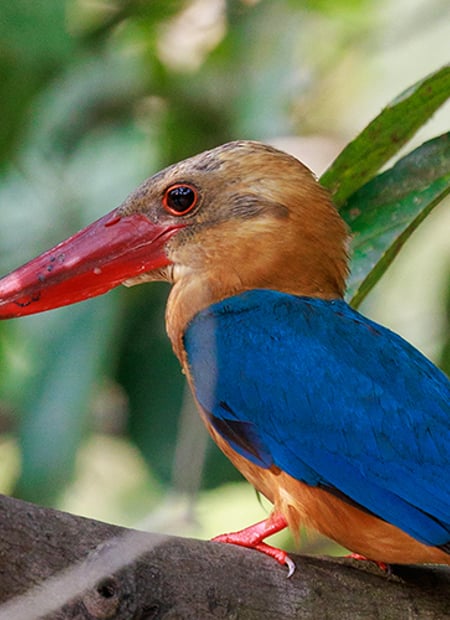
The Blue-eared Kingfisher is a stunningly vibrant, small kingfisher found across dense evergreen forests and riverine habitats in South and Southeast Asia. Characterised by its deep blue upperparts, bright rufous underparts, and distinct blue ear-coverts, it closely resembles the Common Kingfisher but is generally darker. It is highly territorial and typically hunts from a low, shaded perch close to the water, diving rapidly to catch small fish and crustaceans.
Blue-eared Kingfisher Quick Facts
Frequently Asked Questions About the Blue-eared Kingfisher
The Blue-eared Kingfisher is usually solitary.
The Blue-eared Kingfisher is typically diurnal.
The Blue-eared Kingfisher is resident.
The main threats facing the Blue-eared Kingfisher include Deforestation, Water pollution, and Habitat loss.
The Blue-eared Kingfisher population trend is currently decreasing.
Well-known places to look for the Blue-eared Kingfisher include Kinabatangan River (Borneo), Danum Valley (Malaysia), Khao Yai National Park (Thailand), and Sinharaja Forest Reserve (Sri Lanka).
Natural predators of the Blue-eared Kingfisher include Birds of prey and Snakes.
The Blue-eared Kingfisher is part of the Alcedinidae family and a Coraciiformes order.
The Blue-eared Kingfisher weighs about 0.018 kg and reaches about 16 cm in length.