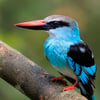
Blue-breasted Kingfisher
Halcyon malimbica
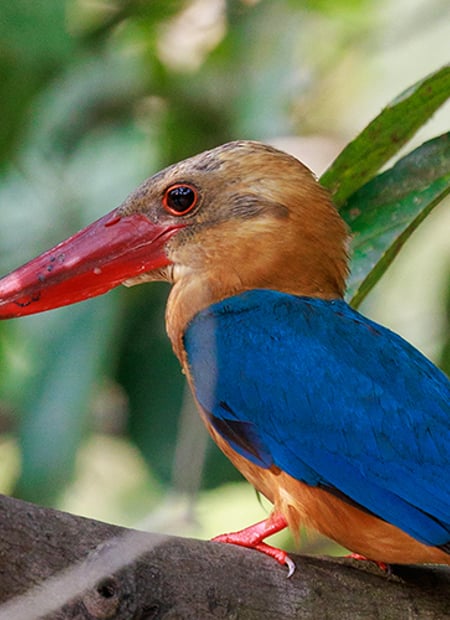
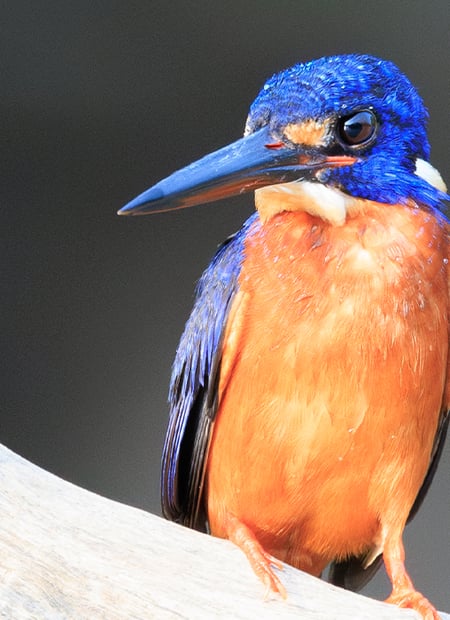
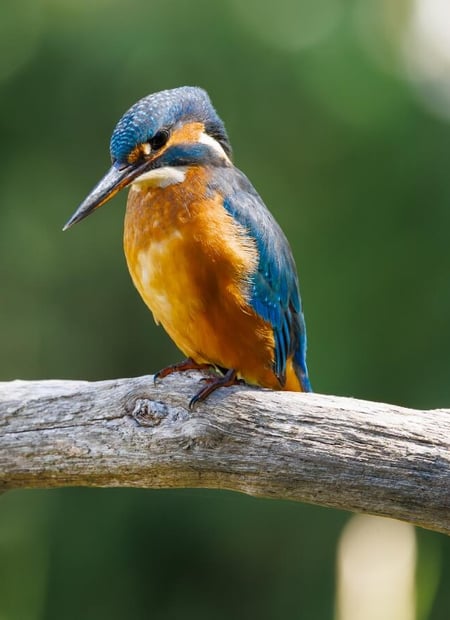
The Blue-breasted Kingfisher is a large, brightly coloured tree kingfisher widely distributed across equatorial sub-Saharan Africa. It is characterised by its striking blue upperparts, bright blue breast band, greyish-white throat and belly, and a distinctive bill with a red upper mandible and black lower mandible. Inhabiting well-wooded environments near waterways and moist tropical forests, it typically perches quietly in the deep shade, waiting to pounce on prey ranging from large insects to small fish and lizards.
Blue-breasted Kingfisher Quick Facts
Frequently Asked Questions About the Blue-breasted Kingfisher
The Blue-breasted Kingfisher is resident across equatorial Africa, from Senegal to Uganda, inhabiting dense woodlands, mangrove swamps, and riverine forests.
This species frequently nests inside active tree-dwelling termite mounds, excavating a tunnel and nesting chamber directly into the structure.
It is an opportunistic feeder consuming large insects (like beetles and grasshoppers), crabs, fish, small reptiles, and occasionally oil palm fruits.
The Blue-breasted Kingfisher is usually solitary.
The Blue-breasted Kingfisher is typically diurnal.
The Blue-breasted Kingfisher is resident (with local seasonal movements).
The main threats facing the Blue-breasted Kingfisher include Deforestation and Habitat degradation.
The Blue-breasted Kingfisher population trend is currently stable.
Well-known places to look for the Blue-breasted Kingfisher include Kibale National Park (Uganda), Queen Elizabeth National Park (Uganda), and Kakum National Park (Ghana).
Natural predators of the Blue-breasted Kingfisher include Arboreal snakes and Birds of prey.
The Blue-breasted Kingfisher is part of the Alcedinidae family and a Coraciiformes order.
The Blue-breasted Kingfisher weighs about 0.08 kg and reaches about 25 cm in length.