Black Kite
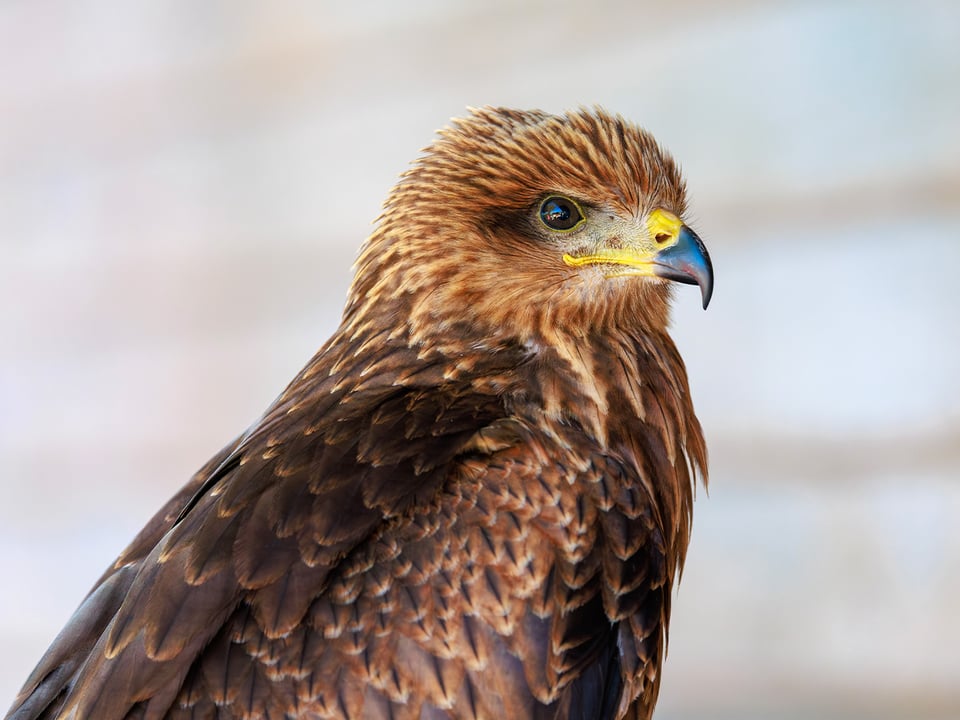
A dark brown, fork-tailed raptor and skilled scavenger, one of the most numerous birds of prey in the world.
- Lifespan
- Around 12 years (wild)
- Habitat
- Rivers, wetlands, open country and towns
- Diet
- Fish, small mammals, birds, insects and carrion
- Region
- Europe, Africa, Asia and Australia
01 — Gallery
Black Kite photographs
Select a photograph to view it full size.
02 — Field guide
Getting to know the Black Kite
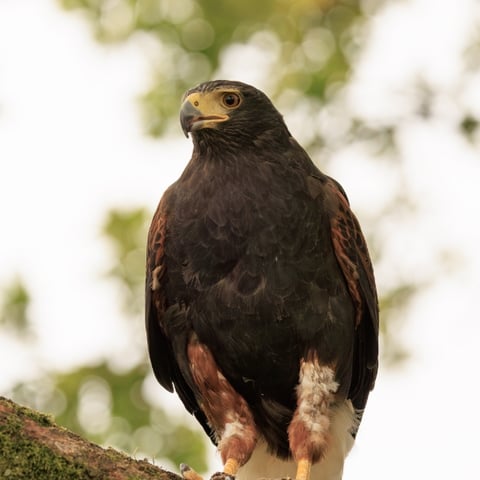
The Black Kite is a medium-sized, dark brown raptor with a yellow cere and feet and a shallow-forked tail that it constantly twists to steer as it glides. It is one of the most numerous birds of prey in the world, found across Europe, Africa, Asia and Australia. A highly adaptable scavenger and opportunist, it gathers near rivers, rubbish tips, fish markets and towns, and in Europe migrates to Africa for the winter in large flocks.
Questions & answers
The Black Kite is darker and more uniformly brown, with a shorter, only slightly forked tail that can look almost straight when spread. The Red Kite is more rufous, with a pale grey head, bold white wing patches and a deeply forked, rusty-red tail.
It breeds across much of Europe, Africa, Asia and Australia, usually near water. European birds migrate to sub-Saharan Africa for the winter, crossing at narrow sea crossings such as the Strait of Gibraltar in huge numbers, while many tropical populations stay put all year.
It is an opportunistic carnivore and scavenger, taking fish, small mammals, birds, reptiles and insects, and readily feeding on carrion and food waste. It often snatches food from the water's surface or steals it from other birds.
The Black Kite is listed as Least Concern because of its enormous range and population. Some regional populations have declined because of poisoning, pesticides, electrocution on power lines and changes to waste disposal.
The Black Kite is usually gregarious; roosts and migrates in large flocks, nests in pairs or loose colonies.
The Black Kite is typically diurnal.
The Black Kite is migratory in europe and northern asia; resident in the tropics.
The main threats facing the Black Kite include Poisoning and pesticides, Electrocution on power lines, and Habitat loss near wetlands.
The Black Kite population trend is currently unknown.
Well-known places to look for the Black Kite include Strait of Gibraltar (Spain) and Doñana National Park (Spain).
Natural predators of the Black Kite include Eagle-owls, Large eagles, and Crows and martens (eggs and chicks).
Often called a 'firehawk' in northern Australia, where Aboriginal knowledge of kites spreading bushfires was long recorded before being confirmed by scientists.
The Black Kite is part of the Accipitridae family and an Accipitriformes order.
The Black Kite weighs about 0.85 kg, stands around 55 cm tall, reaches about 55 cm in length, and has a wingspan of about 150 cm.