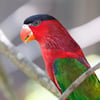
Black-capped Lorry
Lorius lory
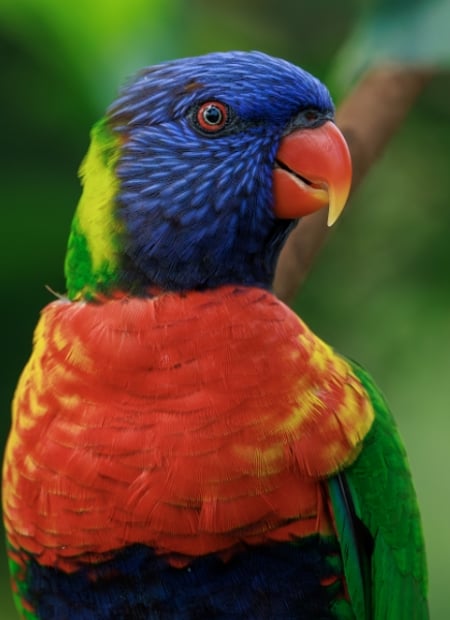
The Black-capped Lorry is a vibrantly coloured parrot native to New Guinea and adjacent islands. It is easily distinguished by its bright red body, deep blue underparts, green wings, and a striking black cap on its head. Highly social and vocal, it inhabits primary rainforests and forest edges, feeding primarily on nectar, pollen, flowers, and soft fruits with its specialised brush-tipped tongue.
Black-capped Lorry Quick Facts
Frequently Asked Questions About the Black-capped Lorry
The Black-capped Lorry is native to New Guinea and its surrounding islands, inhabiting primary lowland rainforests and forest edges.
It feeds mainly on nectar, pollen, flowers, and soft fruits. Like other lorries, it has a brush-tipped tongue adapted for nectar-feeding.
No, it is currently listed as Least Concern by the IUCN, although it faces threats from habitat loss and poaching for the cage-bird trade.
The Black-capped Lorry is usually pairs or small flocks.
The Black-capped Lorry is typically diurnal.
The Black-capped Lorry is resident.
The main threats facing the Black-capped Lorry include Habitat loss and Trapping for the pet trade.
The Black-capped Lorry population trend is currently stable.
Well-known places to look for the Black-capped Lorry include Port Moresby (Papua New Guinea), Biak Island (Indonesia), and Arfak Mountains (West Papua).
Natural predators of the Black-capped Lorry include Birds of prey and Snakes.
The Black-capped Lorry is part of the Psittaculidae family and a Psittaciformes order.
The Black-capped Lorry weighs about 0.22 kg and reaches about 31 cm in length.