Bald Eagle
Haliaeetus leucocephalus
Also known as: American Eagle
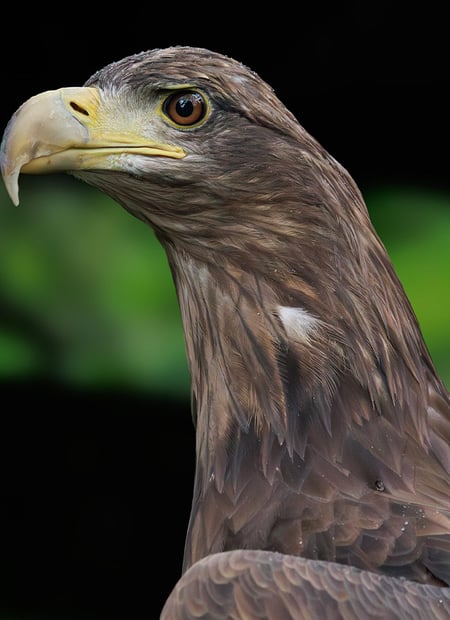
The Bald Eagle is a powerful sea eagle native to North America, easily recognised by its stark white head and tail contrasting with a dark brown body. They build some of the largest tree nests of any animal, which can weigh up to a tonne. While they are capable hunters, they are also notorious kleptoparasites, frequently stealing fish from other birds like osprey.
Bald Eagle Quick Facts
Frequently Asked Questions About the Bald Eagle
Bald Eagles reuse the same nest year after year and keep adding fresh sticks, grasses, and softer lining material each breeding season. Over time that repeated rebuilding can turn a nest into one of the largest structures made by any bird.
The Bald Eagle can be found in North America and is most often associated with Near large bodies of open water.
The Bald Eagle feeds on Fish, small mammals and is considered a carnivore.
The Bald Eagle is currently listed as Least Concern, with a increasing population trend. Main threats include Pollution (lead/pesticides), Habitat loss.
The Bald Eagle is usually solitary/pairs.
The Bald Eagle is typically diurnal.
The Bald Eagle is partially migratory.
The main threats facing the Bald Eagle include Pollution (lead/pesticides) and Habitat loss.
The Bald Eagle population trend is currently increasing.
Well-known places to look for the Bald Eagle include Alaska (USA) and Haines (Alaska).
Natural predators of the Bald Eagle include None as adults and Gulls/Ravens (on eggs).
National bird and symbol of the United States of America.
The Bald Eagle is part of the Accipitridae family and an Accipitriformes order.
The Bald Eagle weighs about 4.5 kg, stands around 90 cm tall, reaches about 95 cm in length, and has a wingspan of about 200 cm.
The Bald Eagle can reach speeds of around 70 km/h.