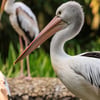
Australian Pelican
Pelecanus conspicillatus
Also known as: Spectacled Pelican, Goolayyal
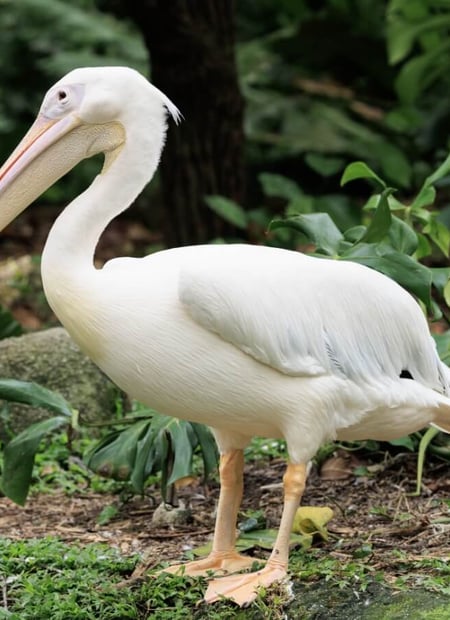
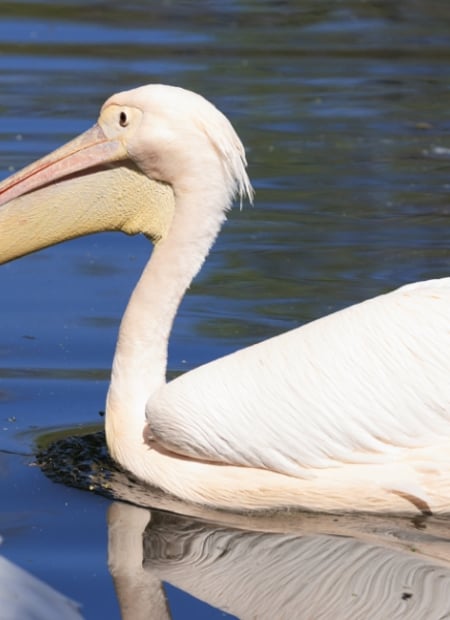
The Australian Pelican is a large waterbird widespread in the inland and coastal waters of Australia, New Guinea, Fiji, and parts of Indonesia. It has the longest bill of any living bird, which can reach up to 50 cm in length, and a massive pink throat pouch used to scoop up fish and drain water. Primarily white with black flight feathers, these birds are highly nomadic, travelling vast distances to find suitable water bodies and nesting grounds, particularly after heavy rains in the arid interior of Australia.
Australian Pelican Quick Facts
Frequently Asked Questions About the Australian Pelican
The throat pouch (gular pouch) acts as a scoop net. It is not used for storing food long-term, but rather to catch fish and then drain out water before swallowing.
They are highly nomadic and use thermal air currents to soar to heights of up to 3,000 meters, allowing them to search huge areas for temporary wetlands.
The Australian Pelican is usually highly social (gregarious).
The Australian Pelican is typically diurnal.
The Australian Pelican is nomadic.
The main threats facing the Australian Pelican include Habitat degradation, Pollution, and Fishing line entanglement.
The Australian Pelican population trend is currently stable.
Well-known places to look for the Australian Pelican include Lake Eyre (Australia), Kangaroo Island (Australia), and Noosa River (Queensland).
Natural predators of the Australian Pelican include Dingoes (on eggs/chicks) and Birds of prey (on chicks).
Featured in many Indigenous Australian stories and a beloved icon of Australian coastal towns.
The Australian Pelican is part of the Pelecanidae family and a Pelecaniformes order.
The Australian Pelican weighs about 6 kg, stands around 170 cm tall, reaches about 170 cm in length, and has a wingspan of about 240 cm.
The Australian Pelican can reach speeds of around 56 km/h.