Asian Openbill
Anastomus oscitans
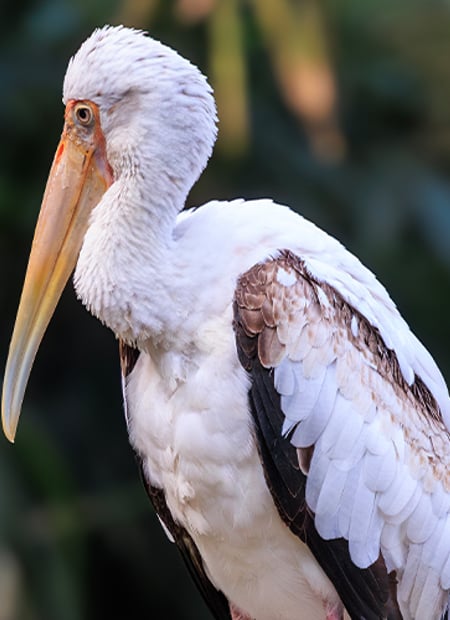
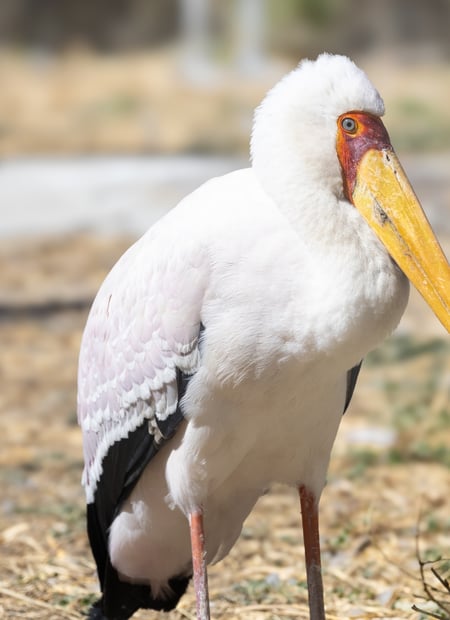
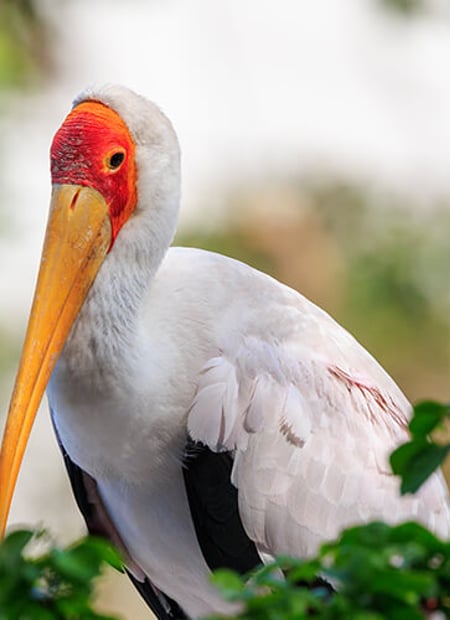
The Asian Openbill is a medium-sized stork of South and Southeast Asia, immediately recognisable by the distinctive gap between its mandibles when the bill is closed a feature that gives the bird its name and is adapted specifically for handling its primary prey. The curved lower mandible and straight upper mandible create a forceps-like mechanism for gripping and extracting apple snails from their shells, a skill that makes the species a highly specialised molluscivore. Largely grey-white with glossy black flight feathers, breeding adults develop a faint pinkish flush on the face. Asian Openbills are gregarious birds that nest colonially in trees over or near water, often alongside herons and cormorants, and form large flocks that follow flooding ricefields and wetlands across their range.
Asian Openbill Quick Facts
Frequently Asked Questions About the Asian Openbill
The Asian Openbill is found across South and Southeast Asia, from India and Sri Lanka east through Myanmar, Thailand, Cambodia, and Vietnam to southern China. It favours wetlands, rice paddies, and flooded fields.
The open bill is a precise adaptation for feeding on molluscs, particularly apple snails. The curved lower mandible acts like forceps, allowing the bird to grip and extract snails from their shells without crushing them it is not a deformity.
The Asian Openbill is listed as Least Concern by the IUCN, and its population is thought to be increasing. It has benefited from the expansion of rice cultivation, which provides ideal foraging habitat.
The Asian Openbill is usually highly gregarious, colonial nester.
The Asian Openbill is typically diurnal.
The Asian Openbill is partially migratory.
The main threats facing the Asian Openbill include Wetland drainage and habitat loss, Pesticide use affecting snail populations, and Disturbance at nesting colonies.
The Asian Openbill population trend is currently increasing.
Well-known places to look for the Asian Openbill include Bundala National Park (Sri Lanka), Keoladeo National Park (India), Tonle Sap Lake (Cambodia), and Don Hoi Lot (Thailand).
Natural predators of the Asian Openbill include Large raptors and Crocodilians.
The Asian Openbill is part of the Ciconiidae family and a Ciconiiformes order.
The Asian Openbill weighs about 1.5 kg, reaches about 81 cm in length, and has a wingspan of about 145 cm.