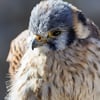
American Kestrel
Falco sparverius
Also known as: Sparrow Hawk
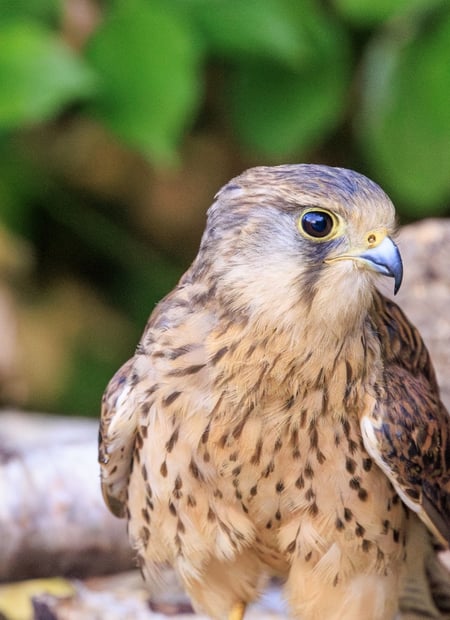
The American Kestrel is the smallest falcon in North America, noted for its colourful plumage and agile hunting flight. Often seen perched on wires or hovering over open fields as it hunts for insects and small rodents.
American Kestrel Quick Facts
Frequently Asked Questions About the American Kestrel
American Kestrels can see ultraviolet light, which may help them notice the urine trails left by small mammals such as voles. Those glowing scent-marked pathways can highlight places where prey is active, giving the kestrel an extra hunting advantage.
The American Kestrel can be found in North and South America and is most often associated with Open country, farmland, grasslands.
The American Kestrel feeds on Insects, small mammals, birds and is considered a carnivore/insectivore.
The American Kestrel is currently listed as Least Concern, with a decreasing population trend. Main threats include Pesticides, Habitat loss.
The American Kestrel is usually solitary.
The American Kestrel is typically diurnal.
The American Kestrel is partially migratory.
The main threats facing the American Kestrel include Pesticides and Habitat loss.
The American Kestrel population trend is currently decreasing.
Well-known places to look for the American Kestrel include Grasslands of North America.
Natural predators of the American Kestrel include Cooper's hawks and Barn owls.
A common and beloved sight for birdwatchers across the US.
The American Kestrel is part of the Falconidae family and a Falconiformes order.
The American Kestrel weighs about 0.12 kg, stands around 28 cm tall, reaches about 28 cm in length, and has a wingspan of about 55 cm.
The American Kestrel can reach speeds of around 60 km/h.