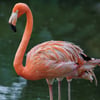
American Flamingo
Phoenicopterus ruber
Also known as: Caribbean Flamingo
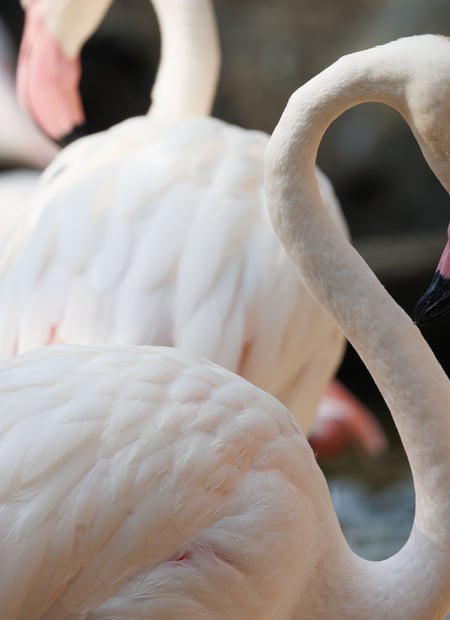
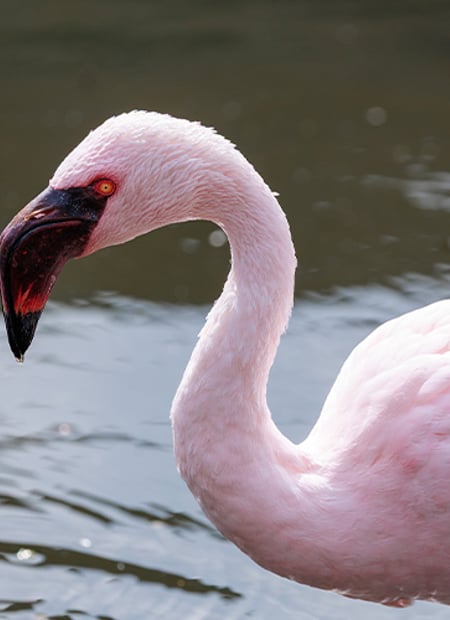
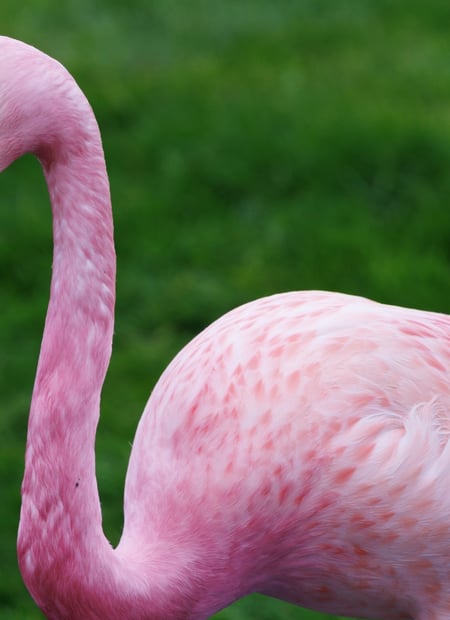
American Flamingos are iconic wading birds known for their vibrant pink plumage, stilt-like legs, and distinctive S-shaped necks. They are filter feeders, using their uniquely inverted beaks to strain algae and brine shrimp from the water, which provides the carotenoid pigments responsible for their colour. These highly social birds live in colonies numbering in the thousands, often performing synchronized courtship displays.
American Flamingo Quick Facts
Frequently Asked Questions About the American Flamingo
The American Flamingo is partially migratory and is associated with Lakes, lagoons, mangrove swamps in Africa, Asia, the Americas, and Europe.
The American Flamingo can be found in Africa, Asia, the Americas, and Europe and is most often associated with Lakes, lagoons, mangrove swamps.
The American Flamingo feeds on Algae, crustaceans, small insects and is considered a omnivore (filter feeder).
The American Flamingo is currently listed as Least Concern, with a increasing population trend. Main threats include Habitat loss, Disturbance at nesting sites.
The American Flamingo is usually colonial.
The American Flamingo is typically diurnal.
The main threats facing the American Flamingo include Habitat loss and Disturbance at nesting sites.
The American Flamingo population trend is currently increasing.
Well-known places to look for the American Flamingo include Celestun (Mexico) and Galápagos Islands.
Natural predators of the American Flamingo include Jaguars, Crocodiles, and Eagles.
The national bird of the Bahamas.
The American Flamingo is part of the Phoenicopteridae family and a Phoenicopteriformes order.
The American Flamingo weighs about 2.8 kg, stands around 120 cm tall, reaches about 120 cm in length, and has a wingspan of about 150 cm.
The American Flamingo can reach speeds of around 56 km/h.